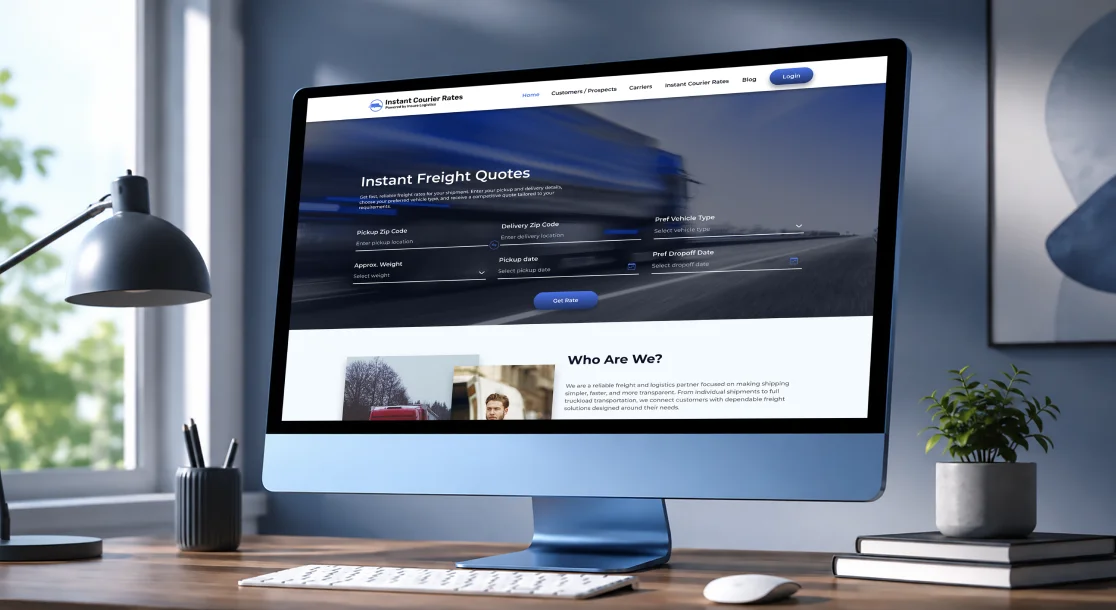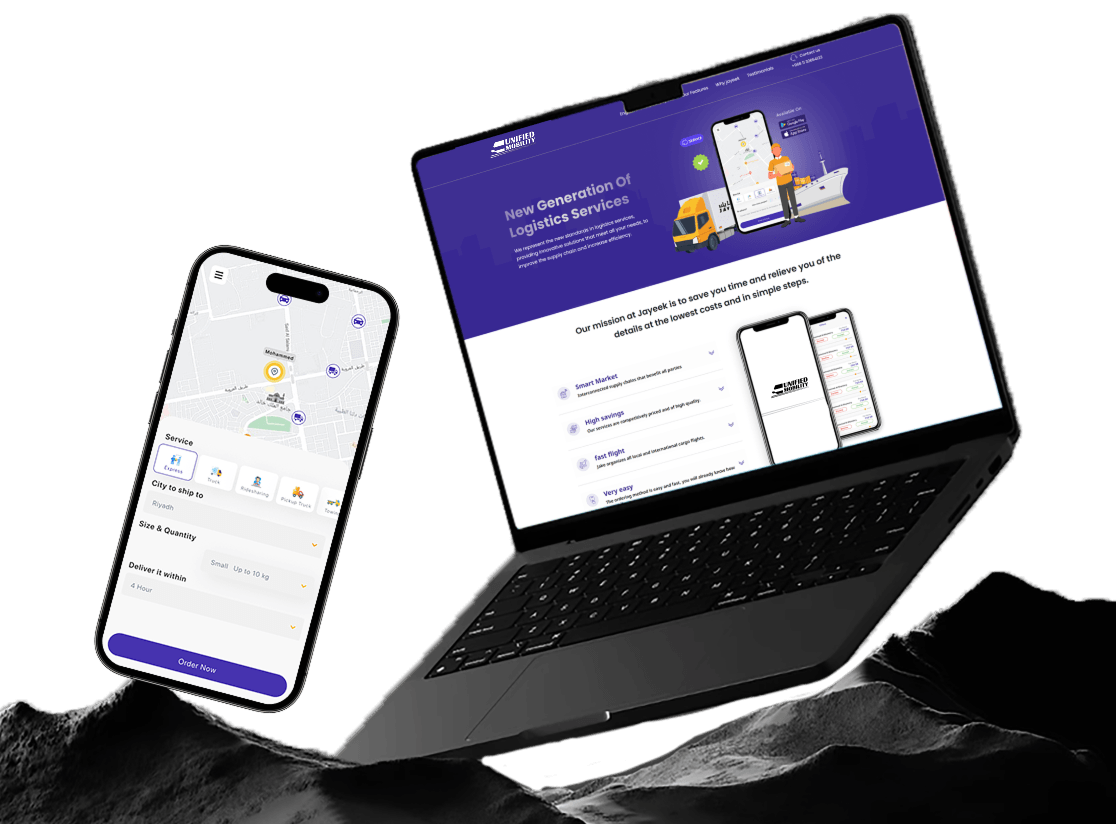

Transport and shipment management
Order intake, shipment creation, consolidation, load planning, carrier assignment and status tracking across road, air, sea and last-mile legs.
Logistics and Supply Chain Management Software
InfoSparkles provides logistics management system development for freight forwarders, carriers, third-party logistics (3PL) providers, distributors, manufacturers and retailers that want one platform to plan, run and monitor their logistics operations. We design and build secure, scalable systems that connect orders, shipments, carriers, routes, warehouses, documents, costs and customers, with real-time visibility and the reports managers need.
Whether you are replacing spreadsheets and email, joining up separate tools for transport, warehouse and tracking or building a logistics product to sell to other businesses, our team handles the full journey from process mapping and design to development, integration, rollout and long-term support. Logistics platforms are part of our wider logistics and supply chain work, and we have been delivering software for clients in the UAE, Europe, Australia, the United Kingdom and the United States since 2014.
A logistics management system is software that helps businesses manage the movement of goods from order to delivery. It typically covers order and shipment management, carrier and rate management, transport planning and routing, tracking and status updates, documents and proof of delivery, billing and cost control, and reporting, so that managers and customers can see what is moving, where it is and what it costs.
Logistics is a chain of handoffs between suppliers, warehouses, carriers, drivers and customers. When each step runs in a different tool, or in email and spreadsheets, shipments are delayed, costs are hard to see, customers keep calling for updates and nobody can say which carriers perform. A logistics management system turns the chain into one connected process, so exceptions are found early and every party works from the same information.
Every logistics platform connects several groups. Shippers and customers place orders and follow shipments. Logistics planners and dispatchers plan loads, assign carriers and drivers and manage exceptions. Carriers and drivers receive jobs, update status and submit documents. Finance teams manage rates, invoices and costs, and managers monitor performance.

Logistics teams use several kinds of software, and understanding them helps you choose the right mix.
A custom logistics management system is built around your operations, partners and reports. An off-the-shelf transport management system (TMS) covers standard transport planning and execution. A warehouse management system (WMS) manages stock and operations inside the warehouse. Carrier portals give each carrier a view of its own bookings and payments. Spreadsheets and email work for a few shipments and fail as volume grows.
| Option | Main purpose | Best for |
|---|---|---|
| Custom logistics management system | Orders, shipments, partners and reports built around your operation | Operators with specific workflows or products built around logistics data |
| Off-the-shelf TMS | Standard transport planning and execution | Shippers with standard transport needs |
| Warehouse management system | Stock and operations inside the warehouse | Warehouses and fulfilment centers |
| Carrier portal | Carrier self-service for bookings and payments | Networks of carriers and drivers |
| Spreadsheets and email | Manual tracking and messages | Very small operations |
Most projects combine these. A custom platform can sit in the middle, connecting your warehouse management system, tracking, dispatch and ERP.
Where a Logistics Management System Pays Back. A logistics management system pays back through lower transport and handling costs, fewer delays and missed deliveries, less manual work for planners and finance, better carrier and route choices, fewer customer calls and clear performance data. For companies building logistics products for others, the usual revenue models are subscriptions per user or shipment and transaction fees.
Fragmented tools and manual coordination. Orders in one tool, tracking in another and invoices in a third cause rework. One platform connects them.
Limited real-time visibility. Without live data, nobody knows where a shipment is. Tracking and status updates give customers and planners a shared view.
Inefficient routing and carrier selection. Poor planning wastes fuel and time. Route planning, carrier rate comparison and load rules improve choices.
Delays and missed deliveries. Problems found late are expensive. Alerts for delays and exceptions let teams act early.
Paperwork and proof of delivery. Paper documents are slow and get lost. Digital documents, signatures and photos speed up completion and billing.
Cost and billing control. Freight costs, surcharges and invoices are hard to reconcile. Rate cards, cost tracking and automated billing show true margins.
Limited insight into performance. Without data, partners and routes cannot be compared. Dashboards show on-time delivery, cost and exceptions by carrier, lane and customer.
Order intake, shipment creation, consolidation, load planning, carrier assignment and status tracking across road, air, sea and last-mile legs.
Portals and apps where carriers and drivers receive jobs, update status, upload documents and track payments, built with our on-demand driver platforms experience.
Job assignment, routing and live driver tracking for deliveries, covered in our delivery and dispatch management software.
Tracking pages, notifications and status APIs for customers and partners, covered in our shipment tracking platforms.
Connections to stock and warehouse operations, covered in our warehouse management systems.
Platforms where shippers request quotes and carriers bid, as in our freight marketplace and load board platform development.
Order and shipment management, load and route planning, carrier and driver assignment, live maps and status boards, exception alerts, document management, proof of delivery and customer notifications.
Rate cards and carrier contracts, freight cost and surcharge tracking, automated invoicing and carrier payments, margin reports, on-time and exception reports, and dashboards by carrier, lane, customer and period.
Role-based access for staff, carriers and customers, multi-language and multi-currency support, audit logs, configurable workflows and an API-first design that connects the system to ERP, warehouse, carrier and customer systems. A cloud-based, high-availability architecture handles large shipment volumes.
A logistics system depends on data from many partners. We integrate:
Carrier and courier APIs for rates, bookings, labels, tracking and proof of delivery.
Vehicle trackers and telematics providers for live location and events, as in our fleet management systems.
Mapping APIs for geocoding, routes, distances and ETAs.
Orders, invoices and costs shared with our ERP development and integration work and accounting tools.
Order feeds and status updates through APIs and webhooks for retailers and platforms.
Email, SMS, WhatsApp and push alerts, and our business intelligence platforms for logistics reporting.
| Factor | Off-the-shelf TMS or logistics software | Custom logistics management system |
|---|---|---|
| Time to start | Fast | Months, delivered in phases |
| Upfront cost | Lower | Higher |
| Ongoing cost | Per-user or per-shipment subscriptions that grow with volume | Hosting and maintenance, no per-shipment fees |
| Fit with your operation | Standard workflows | Built around your lanes, partners, rules and documents |
| Integrations | Vendor-supported only | Built around your carriers, ERP and customer systems |
| Customer experience | Generic tracking pages | Branded portals and APIs |
| Ownership | Vendor owns the platform and data model | You own the code and all data |
Off-the-shelf software suits shippers with standard needs. Custom development makes more sense when your workflows are specific, when per-shipment fees grow with volume, when you need deep partner integration or when logistics software is part of your product. For a wider view, read how custom software development helps businesses scale faster.
Cost depends on scope, and we provide a clear estimate after a short discovery phase. These factors have the biggest influence:
Order and shipment management alone is smaller than planning, tracking, documents, billing and several transport modes together.
Each carrier, device and customer system adds integration work.
High shipment volumes and frequent location updates need an architecture built for scale.
Customer, carrier and driver portals and mobile apps extend the build.
Rate cards, automated billing and custom dashboards add scope.
Most clients start with order and shipment management, tracking and reporting, then add planning, billing and portals in phases. Tell us about your operation and we will send a free, no-obligation estimate.
A focused system with order and shipment management, carrier assignment, tracking and reports typically takes around four to six months. A larger platform with planning, billing, multi-mode transport, partner portals, mobile apps and integrations usually takes six to nine months or more, delivered in phases so teams adopt it early.
We work with your planners, dispatchers, warehouse and finance teams to map how orders move today, where delays and costs arise and what to build first.
Our architects design the data model and integrations for scale, while our UI and UX design team designs planner, driver and customer screens as clickable prototypes.
We build in short sprints with regular demos, adding shipment management, tracking and partner connections step by step.
We test shipment flows, tracking, documents and billing with realistic data and volumes, plus performance and security testing.
We launch on scalable infrastructure managed through our cloud and DevOps services, migrate data and train your teams and partners.
We monitor performance, fix issues quickly and add carriers, modules and reports as your operation grows.
We choose technology for real-time data, reliability and scale. Final choices are confirmed during discovery.
Frontend
 React
 Next.js
 Vue
 Angular
Backend
 Node.js
 Python
 PHP
Mobile
 Flutter for iOS and Android
Data and caching
 PostgreSQL
 MySQL
 MongoDB
 Redis
Real-time
 Firebase
 WebSockets
Cloud
 AWS
 S3
 Microsoft Azure
Payments
 Stripe
 PayPal
 Regional gateways
Integrations
 Google Maps APIs
 Telematics
 ERP
 Accounting
 Email and chat
Role-based access. Planners, drivers, carriers, customers and finance see only the shipments and data their role allows.
Data protection. Shipment, customer and driver data is encrypted in transit and at rest, driver location is handled according to your policies, and systems are designed to support GDPR, UK GDPR, the UAE Personal Data Protection Law, CCPA and CPRA and the Privacy Act 1988 in Australia.
Audit trails. Status changes, document uploads, rate changes and payments are logged with the user and time, which supports claims and disputes.
Secure integrations and backups. Carrier and device connections use authenticated, encrypted APIs, and automated backups and monitoring protect operational data.
We add AI where logistics data can save time and money: ETA prediction that learns from routes, traffic and past performance; route and load optimization that suggests better plans; demand forecasting that helps plan capacity; delay and anomaly alerts that flag shipments likely to be late or costs that look wrong; document reading that extracts details from delivery notes, invoices and customs papers; and carrier recommendations based on cost and reliability. These capabilities are part of our wider AI-driven automation services and can use our intelligent matching and pricing engines.
Built for Connected Logistics Operations
10+ years of custom software development experience
Proven expertise in logistics and delivery platforms
Scalable, cloud-ready system architecture

Real-time tracking, planning and cost control
Transparent communication and project delivery
Long-term support and continuous optimization
We don't just track shipments. We build logistics platforms that keep every handoff connected.
A logistics management system is software that helps businesses manage the movement of goods from order to delivery, with shipment management, carrier and route planning, tracking, documents, billing and reporting in one platform.
A transport management system focuses on planning and executing transport, and a warehouse management system focuses on stock and operations inside the warehouse. A logistics management system connects these and other parts of the chain, and can include either one.
Yes. We build logistics systems around your workflows, partners, documents and reports. You own the full source code and data, with no per-shipment licence fees.
Yes. We integrate with carriers and couriers that offer APIs and with GPS and telematics providers, and we advise on devices if you are choosing new hardware.
Yes. We build branded portals and apps where customers track shipments and carriers and drivers manage jobs, documents and payments.
Yes. We build rate cards, cost and surcharge tracking, automated invoicing and carrier payment calculations, connected to your accounting system.
Cost depends on the modules and transport modes, partner integrations, shipment volume, portals and apps, and reporting and billing needs. We provide a free estimate after a short discovery conversation.
A focused system typically takes around four to six months. A larger platform with planning, billing, partner portals and many integrations usually takes six to nine months or more, delivered in phases.
Yes. We provide ongoing maintenance, monitoring, security updates and new modules and integrations after launch.
Case Study
Whether you are replacing spreadsheets, joining up separate tools or building a logistics product of your own, we are ready to help. Tell us how your orders, partners and shipments move today, and we will recommend the right modules, integrations and a realistic plan to launch.