
AI-Powered Recommendation Engine Development for Real-Time
Personalization
Solutions
Enterprise-ready recommendation and personalization systems that learn from every click, search and purchase, then turn that behavior into revenue.
An AI-powered recommendation engine is a machine learning system that studies how people browse, search and buy, then predicts which products, content or offers each person is most likely to want next.
InfoSparkles provides AI recommendation engine development for eCommerce stores, marketplaces, media platforms and SaaS products. We build custom AI recommendation systems that analyze customer behavior in real time and serve the right product, content or offer to each user at the moment it matters. From collaborative filtering to hybrid deep learning models, we design, train, integrate and maintain recommendation engines that raise engagement, conversion rate and average order value, and we build them to run inside the platform you already have.
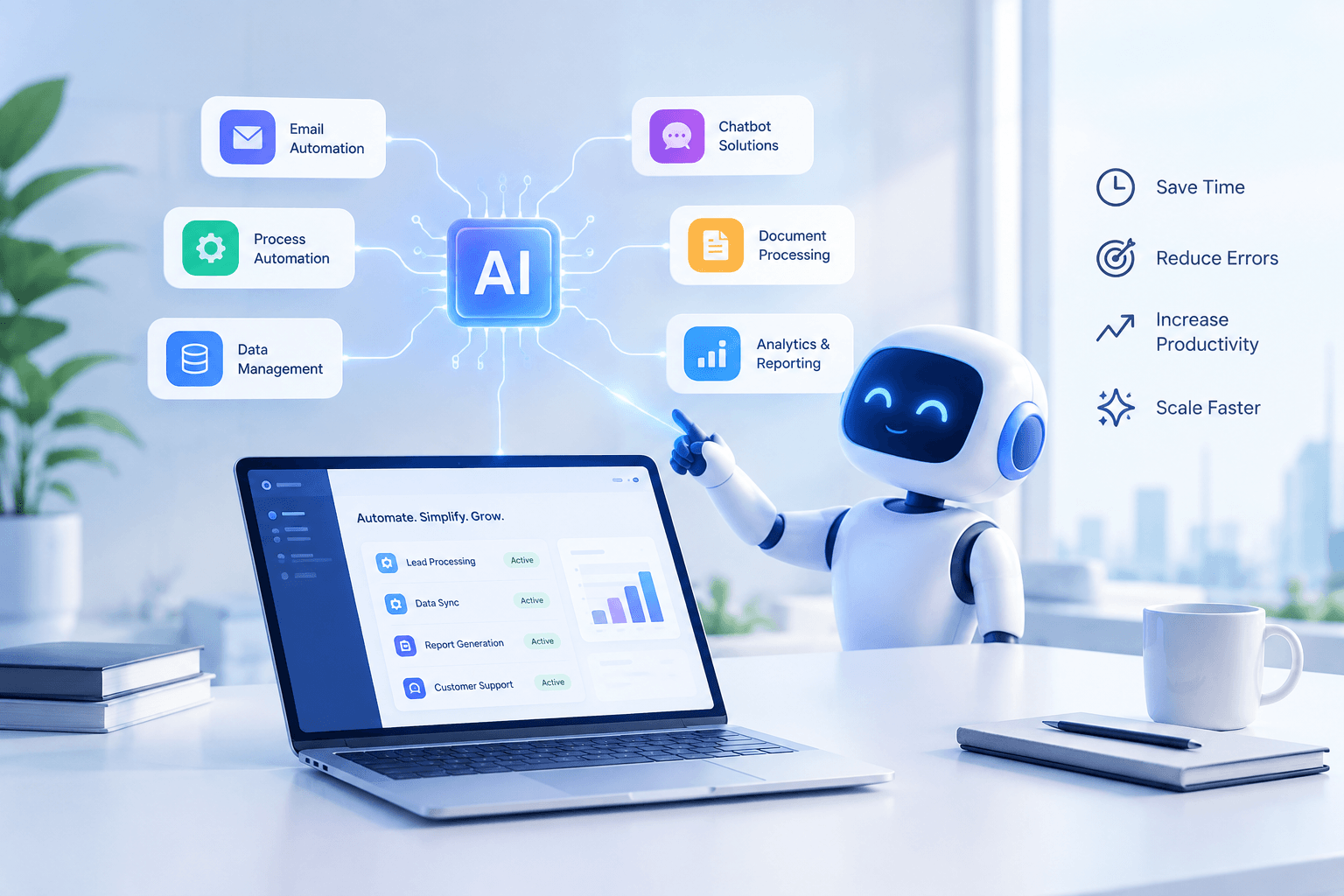
Recommendation engines sit at the center of our AI-driven automation services, and we work with businesses across the US, UK, Australia, the UAE and Europe.

Why Generic Recommendations Cost You Revenue
Most platforms still show the same “bestsellers” block to every visitor. A first-time shopper looking for running shoes sees the same list as a returning customer who buys office furniture. The result is predictable: low click-through on recommendation widgets, abandoned sessions and missed cross-sell revenue that nobody measures because nobody knows it was there to lose.
Off-the-shelf plugins improve on that a little, but they come with limits that growing businesses hit quickly. They rely on simple rules such as “frequently bought together,” they cannot use your own business data like margin, stock levels or customer lifetime value, and they struggle with new users and new products that have no history yet. That last issue, known as the cold-start problem, is where many personalization projects quietly fail.
A custom AI recommendation engine solves these problems because it is trained on your data, tuned to your goals and owned by you. It can favor high-margin items, hide out-of-stock products, respect regional pricing and adapt as behavior changes, none of which a generic widget can do reliably.
What Our AI Recommendation Engine Development
Services Include
We handle the full lifecycle, from data audit to production and ongoing tuning, so you work with one team rather than coordinating data scientists, backend developers and integrators separately.
Recommendation strategy and data audit
We review your data sources, traffic, catalog and business goals, then define which recommendation surfaces will move revenue fastest. Common starting points are product pages, cart, homepage and email.
Data pipeline engineering
We collect and clean behavioral signals such as views, clicks, searches, add-to-carts, purchases, ratings and dwell time, and connect them with catalog, CRM and inventory data in a pipeline that updates continuously.
Model design and training
We select and train the model that fits your data volume and goals, then test it offline against real historical behavior before any customer sees a single suggestion
Real-time recommendation APIs
We deploy the engine behind fast, scalable APIs that return personalized results in milliseconds, whether the request comes from a website, a mobile app or a marketing platform.
Platform integration
We plug recommendations into your existing stack, including Shopify, Magento, WooCommerce, headless storefronts, custom web applications and iOS and Android apps built through our mobile application development team.
Measurement and continuous optimization
We set up A/B testing and dashboards that track click-through, conversion and revenue per session, then retrain and refine the model as your catalog and customers change.
Types of AI Recommendation Engines We Build
There is no single best algorithm. The right approach depends on how much interaction data you have, how often your catalog changes and what you want users to do next. We build and combine the following.
01
Collaborative filtering
This approach recommends items based on the behavior of similar users, the logic behind “customers like you also bought.” It performs well when you have rich interaction history across many users.
02
Content-based filtering
This approach recommends items similar to what a user already likes, using item attributes such as category, brand, price, tags and descriptions. It works well for new catalogs, niche products and specialist inventory.
03
Hybrid recommendation engines
Hybrid models combine collaborative and content-based signals, often with deep learning and vector embeddings, to deliver more accurate and resilient suggestions. This is the approach we recommend for most growing businesses because it handles the cold-start problem for new users and new products.
04
Context-aware and session-based recommendations
These models react to what a user is doing right now, including device, location, time of day and the current browsing session, which makes them valuable for anonymous visitors who have not logged in.
05
Next best action engines
Beyond products, we build engines that decide the next best offer, message or step for each user, such as a discount, an upgrade prompt, a course, a service provider or a support article.
How We Build Your AI Recommendation System
Our AI recommendation system development process is designed to show measurable value early and reduce risk at every stage.
01
Discovery and data assessment
We audit your data, define success metrics and identify the recommendation placements with the highest revenue potential. You get a clear plan and scope before development starts.
02
Data pipeline and feature engineering
We build the pipeline that captures behavioral events and joins them with product and customer data, creating the features the model learns from.
03
Model development and offline testing
We train candidate models and test them against historical data using metrics such as precision, recall and ranking quality, so we choose the best approach on evidence rather than assumption.
04
Integration and real-time serving
We deploy the chosen model behind low-latency APIs and integrate it into your web, app and email channels, with business rules layered on top for stock, margin and merchandising priorities.
05
A/B testing and launch
We release the engine to a share of traffic first, compare it against your current experience and roll it out fully once it proves its lift.
06
Monitoring and continuous learning
After launch we monitor accuracy, speed and business impact, and retrain the model on fresh data so recommendations stay relevant as trends and inventory change.
AI Recommendation Engine Use Cases by
Industry
eCommerce and retail
A product recommendation engine for eCommerce drives personalized homepages, “you may also like” blocks, cart cross-sells, post-purchase emails and smarter on-site search. It is one of the most direct ways to raise average order value, and it pairs naturally with our enterprise eCommerce development work for retailers and B2B sellers. Explore how we support eCommerce and retail businesses, or see the catalog engineering behind our Fairbay enterprise eCommerce platform, which manages around 5,000 product categories.
Marketplaces and on-demand platforms
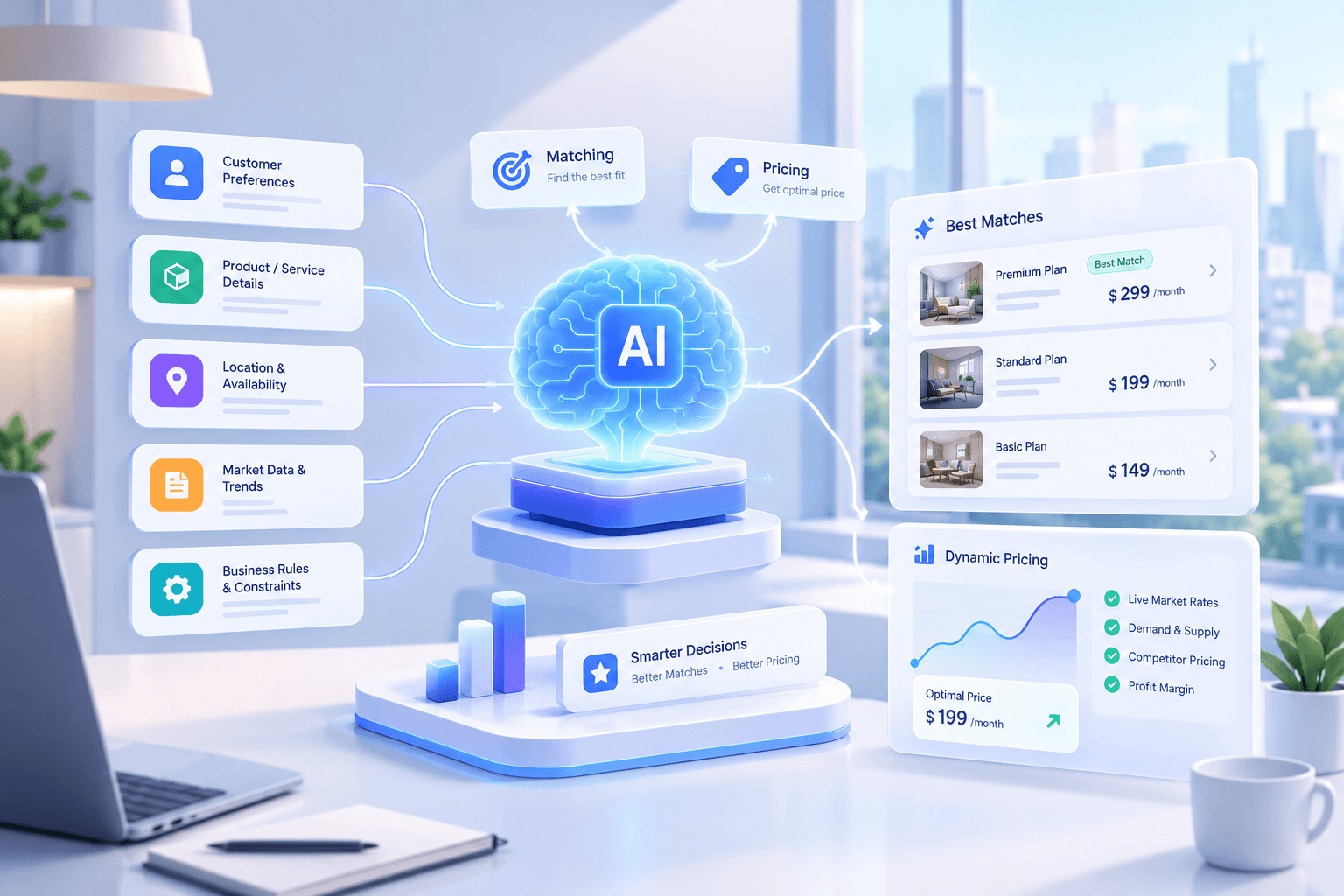
On two-sided platforms, recommendations decide which listings, vendors or service providers each buyer sees first. We build ranking and matching logic that balances relevance, availability and supplier fairness, a natural extension of our marketplace and mobility platform development and our intelligent matching and pricing engines.
Travel, tourism and hospitality
Travelers rarely know exactly what they want. Recommendations for activities, tours, rooms and add-ons, based on destination, dates, group type and past bookings, turn a single booking into a fuller trip. See how this fits our booking and reservation platform development and our work for travel and hospitality operators.
Media, streaming and eLearning
For content platforms, the recommendation engine is the product experience. Personalized feeds, “watch next” and course suggestions increase session length, completion rates and subscriber retention.
SaaS and B2B platforms
Inside software products, recommendations guide users to the features, templates, integrations or content that help them succeed, which lowers churn and supports upgrade paths. We often deliver this alongside our enterprise systems and SaaS development projects.
Fintech and financial services
Personalized product suggestions, relevant offers and next best action prompts must be accurate and explainable. We build recommendation logic with the transparency and controls that regulated fintech and banking businesses need.
The Business Impact of an AI-Powered Recommendation Engine
Recommendation engines are among the highest-return AI investments a digital business can make, and the largest platforms in the world depend on them. McKinsey has estimated that 35 percent of what consumers purchase on Amazon comes from product recommendations. Later McKinsey research found that personalization most often drives a 10 to 15 percent revenue lift. Netflix product leaders have written that personalization and recommendations together save the company more than 1 billion US dollars a year by reducing subscriber churn.
You do not need Amazon’s scale to see results. For most of our clients the gains show up in four places:

Higher conversion rate, because visitors find relevant products faster and leave less often without buying.

Larger average order value, through well-timed cross-sell and upsell suggestions in the cart and at checkout.

Stronger retention, because personalized emails, feeds and in-app suggestions give customers a reason to return.

Better merchandising efficiency, as the engine promotes the right stock automatically instead of relying on manual curation.
How Much Does AI Recommendation Engine Development Cost?
The cost of a custom AI recommendation engine depends on scope rather than a fixed package, and we give you a clear estimate after the discovery phase. The main cost drivers are:

Data readiness
Clean, well-structured event data shortens the build. Scattered or incomplete data needs pipeline work first.

Real-time or batch
Recommendations refreshed nightly cost less to run than engines that respond to every click in milliseconds.

Number of channels
A single website widget is a smaller project than coordinated recommendations across web, mobile app, email and push notifications.

Model complexity
A rules-plus-collaborative-filtering engine is faster to deliver than a hybrid deep learning system with context awareness.

Integrations
Connecting to a single platform is simpler than integrating with an ERP, CRM, PIM and several storefronts.
Many clients start with a focused first release on one or two high-value placements, prove the revenue lift through A/B testing, and then expand. This keeps the initial investment controlled and ties further spending to measured results. Our Free Personalization Audit gives you a realistic scope and cost range before you commit.
Technology Behind Our Recommendation Engines
We choose tools for the job rather than forcing one stack onto every client. Typical components include Python with TensorFlow, PyTorch and scikit-learn for model development; vector databases and embedding models for semantic similarity; Elasticsearch and Redis for fast retrieval and caching, the same technologies behind our large-scale eCommerce builds; Apache Kafka for real-time event streaming; and AWS, Google Cloud or Azure for scalable hosting and managed machine learning services. Where it makes sense, we also add large language models to generate natural-language explanations for recommendations or to power conversational product discovery.
Data Privacy, Security and Compliance
A recommendation engine runs on customer behavior data, so privacy is designed in from the first line of code, not added at the end. We build with consent management, data minimization, pseudonymization and role-based access controls, and we give you control over what data is collected and how long it is kept.
Our systems are designed to support compliance with the regulations that matter in your markets, including GDPR in the EU, UK GDPR and the Data Protection Act 2018 in the United Kingdom, CCPA and CPRA in California, and the Privacy Act 1988 in Australia. We also build fairness checks and business-rule controls into the ranking layer, so recommendations stay relevant without reinforcing bias or exposing sensitive attributes.
Why Choose InfoSparkles as Your AI Recommendation Engine Development Company
01
We build for production, not demos
Many AI projects stall after a proof of concept. We deliver engines that run inside live platforms under real traffic, with the monitoring to keep them accurate.
02
We understand the platforms recommendations live in
We have spent years building the eCommerce stores, marketplaces, booking systems and SaaS products where recommendation engines do their work, so integration is part of our core skill set rather than an afterthought.
03
You own everything
The models, the code and the data pipeline belong to you. There are no per-recommendation fees and no lock-in to a third-party personalization vendor.
04
Measured results
Every engine we ship includes A/B testing and revenue reporting, so you can see exactly what personalization is contributing.
05
One accountable team
Strategy, data engineering, machine learning, backend and front-end integration sit with the same team, which keeps communication simple and delivery predictable.
See more of our delivered work in our case studies, including our AI sales intelligence and outreach platform.
Frequently Asked Questions
AI recommendation engine development is the process of designing, training and deploying a machine learning system that predicts which products, content or offers each user is most likely to want. It covers data pipeline engineering, model development, real-time APIs, integration with your platform and ongoing optimization.
A focused first release on one or two placements typically takes 8 to 12 weeks, depending on data readiness and integrations. Larger multi-channel systems are delivered in phases so you see results early. (Confirm against your own delivery timelines before publishing.)
Less than most businesses expect. Content-based and hybrid models can deliver useful recommendations with a modest amount of interaction data, and they improve as more behavior is collected. We assess your data in the discovery phase and recommend the approach that fits it.
This is the cold-start problem. We solve it with hybrid models that use product attributes, session behavior and contextual signals such as location and device, so new visitors and newly listed items still receive relevant recommendations from day one.
Yes. We integrate with major eCommerce platforms, headless storefronts, custom web applications and native mobile apps through APIs, and we can connect to your CRM, ERP and email tools as well.
For small catalogs with simple needs, a plugin can be enough. Once you need to use your own business data, control margin and stock rules, personalize across several channels or avoid ongoing vendor fees, a custom AI recommendation engine usually delivers better results and a lower long-term cost.
We track click-through rate on recommendations, conversion rate, average order value, revenue per session and retention, and we compare them against your current experience through controlled A/B tests.
Yes. We are an AI recommendation engine development company working with clients across the US, UK, Australia, the UAE and Europe, with communication and project management set up around your time zone.
Related Solutions
AI-Driven Automation Services
Intelligent Matching and Pricing Engines
Service Aggregator Platform
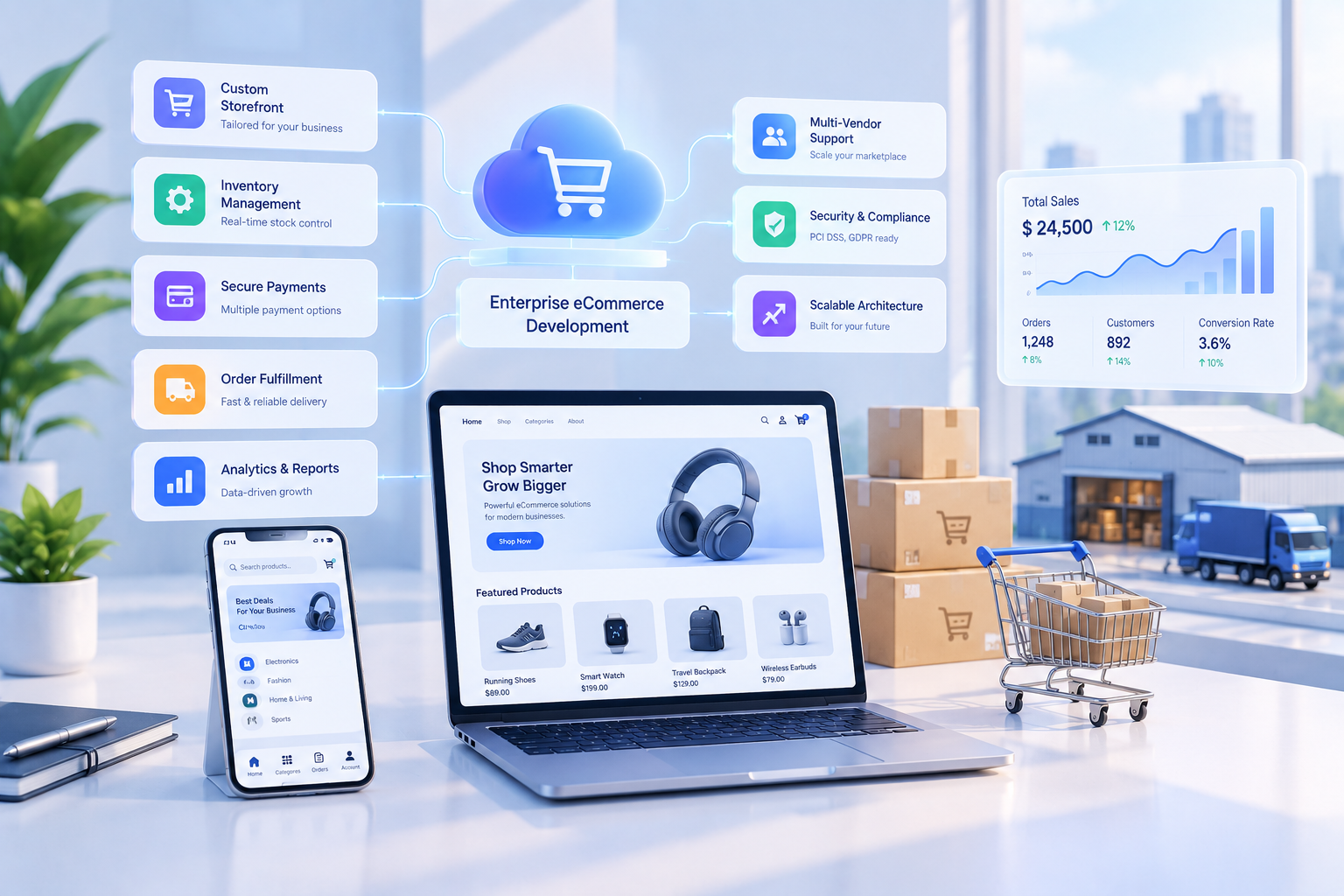
Enterprise eCommerce Development
Related Reading
How Custom Software Development Helps Businesses Scale Faster
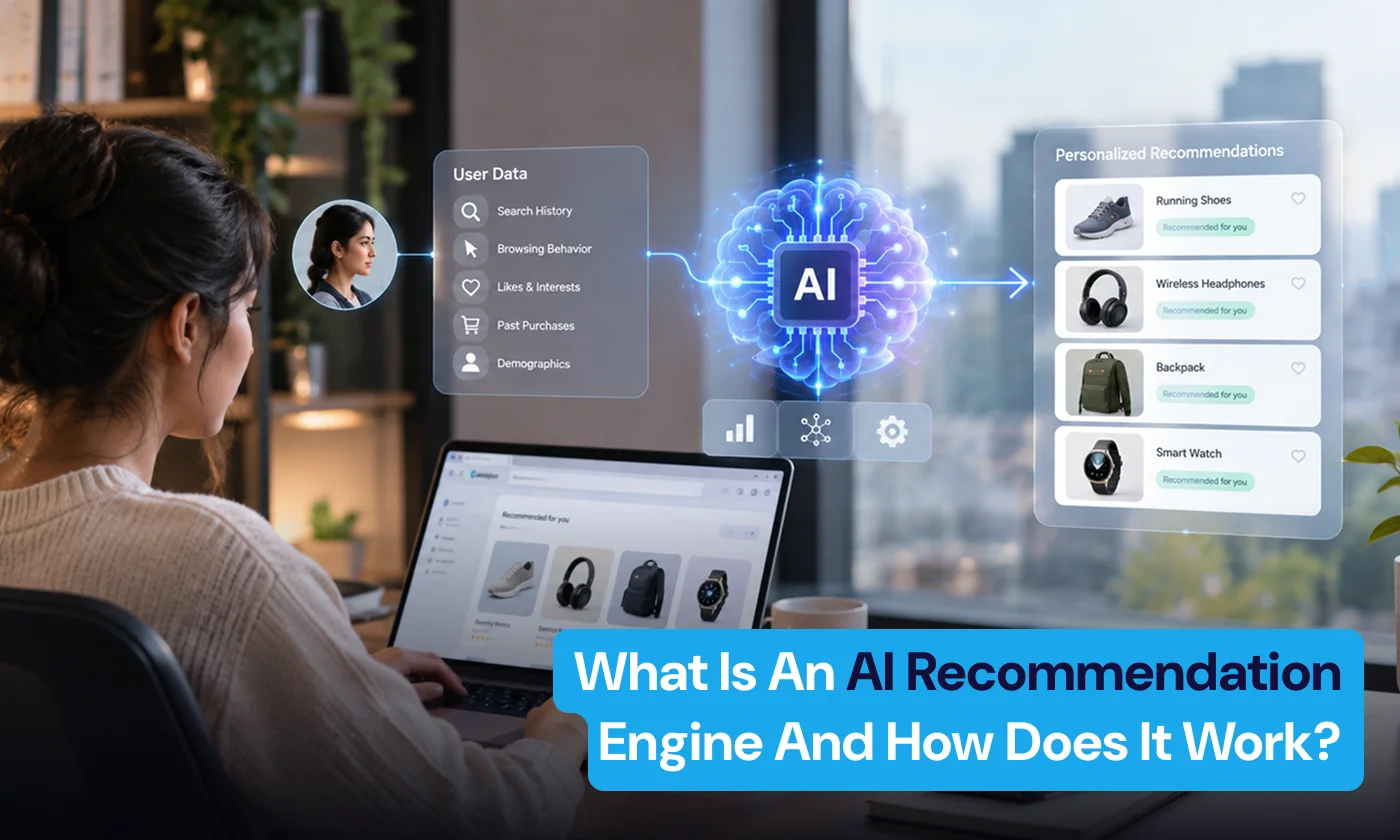
What Is an AI Recommendation Engine and How Does It Work?
How Much Does It Cost to Build an AI Recommendation Engine?
Turn Customer Behavior Into Revenue
Your platform already collects the signals that show what each customer wants next. A custom AI recommendation engine puts those signals to work on every page, in every app session and in every email. Tell us about your platform and goals, and our team will map the placements with the biggest revenue potential, the data you already have and a realistic plan to launch.