
Booking systems for service businesses
Online booking for salons, spas, barbers, fitness studios, tutoring and training centers and other service businesses, with services, staff selection, deposits, reminders and customer accounts.
Appointment Scheduling Software Development
InfoSparkles provides appointment scheduling software development for service businesses, multi-location brands and startups that want customers to book time online without phone calls and back-and-forth messages. We design and build custom booking websites, mobile apps and admin systems with live availability, staff and resource calendars, automated reminders, deposits and payments, built around how your business actually schedules its work.
Whether you run salons, spas, fitness studios, wellness practices, consultancies, training centers or field service teams, or you are building a scheduling product to sell to other businesses, our team handles the full journey from workflow mapping and design to development, launch and long-term support. Scheduling platforms are part of our wider booking and reservation platform development practice, and we have been delivering software since 2014.
Appointment scheduling software is a system that lets customers see real availability and book appointments online, while the business manages staff calendars, services, rooms and equipment, reminders, payments, cancellations and reporting in one place. It replaces phone bookings, paper diaries and spreadsheets with an always-available booking channel.
Scheduling looks simple until real rules appear. Different services take different times, need different staff skills or rooms, require buffers between appointments and follow different cancellation and deposit policies. Staff have shifts, breaks and time off, locations have their own hours and customers book from different time zones. Good scheduling software turns all of these rules into accurate availability, so customers only see times that genuinely work and the business never double-books.
Every scheduling platform connects three groups. Customers choose a service, location and staff member, see available times, book, pay a deposit if required and receive reminders. Staff see their schedule, manage availability and record notes. Managers and administrators configure services, rules and policies, manage locations and staff and track bookings, no-shows and revenue.
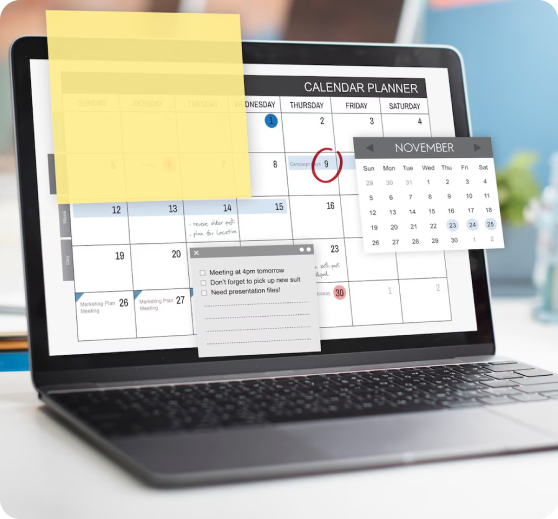
Businesses often compare several kinds of scheduling tools before choosing a direction.
Calendar scheduling tools, such as Calendly, let individuals share availability for meetings. Ready-made booking software, such as Fresha or similar salon and spa systems, offers standard booking for common business types. Booking marketplaces list many businesses and send customers to them for a commission. Custom appointment scheduling software is built around one business's services, rules, brand and integrations, or becomes a scheduling product that business sells to others.
| Software type | Main purpose | Best for |
|---|---|---|
| Calendar scheduling tool | Shares an individual's availability for meetings | Individuals and small teams booking calls |
| Ready-made booking software | Standard booking for common business types | Single locations with standard services |
| Booking marketplace | Lists many businesses for customers to discover | Businesses seeking new customers, for a fee |
| Custom scheduling software | Booking built around your services, rules and brand | Multi-location brands, complex rules and SaaS products |
How scheduling platforms create revenue. For service businesses, scheduling software increases revenue by filling more slots, reducing no-shows with deposits and reminders and selling packages and memberships online. For startups building a scheduling product, the usual models are monthly subscriptions per business or per staff member, booking fees and paid add-ons such as payments, marketing tools or advanced reporting.
Phone tag and lost bookings. Customers who cannot book outside office hours often book elsewhere. Online booking available around the clock captures demand when it happens.
Double bookings and scheduling conflicts. Shared diaries and spreadsheets lead to clashes between staff, rooms and equipment. Real-time availability that checks every rule prevents conflicts automatically.
No-shows and late cancellations. Empty slots cost money. Deposits, card holds, cancellation policies and automated reminders by SMS, email and WhatsApp significantly reduce missed appointments.
Complex services and resources. Services that need specific staff skills, rooms or equipment, or multiple staff at once, are hard to schedule manually. Resource-aware scheduling handles these combinations correctly.
Managing many locations and staff. Multi-location brands need central control with local flexibility. Location-level hours, staff, services and pricing sit under one brand and one reporting view.
Generic tools that do not fit. Standard booking apps force your process into their template and charge per staff member. Custom software follows your rules and grows without per-seat fees.
No insight into utilization. Reports on bookings, utilization, no-shows, popular services and staff performance show where capacity and revenue can grow.
Online booking for salons, spas, barbers, fitness studios, tutoring and training centers and other service businesses, with services, staff selection, deposits, reminders and customer accounts.
Central platforms for brands with many branches, giving customers one place to book any location and giving head office full control of services, pricing, staff and reporting.
Scheduling for rooms, courts, studios, equipment, vehicles and tee times, with capacity rules and time slots. Our Tourtastique platform in Dubai includes time-slot booking for golf tee times alongside tours and transfers.
Scheduling for consultants, coaches, advisors and practitioners, including online sessions. For marketplaces where many experts sell their time remotely, see our online consultation platform development.
Booking and dispatch for technicians and mobile service teams who visit customers, with service areas, travel time and route-aware scheduling. For marketplaces of independent providers, see our service aggregator platform.
Multi-tenant scheduling products that startups sell to many businesses, with subscriptions and white-label options, plus iOS and Android booking apps built in Flutter by our mobile application development team.
Customers want to book in seconds. Our platforms let them choose a service, location and staff member, see real available times in their own time zone and book in a few taps. They can pay a deposit or the full price, buy packages and memberships, join a waitlist for busy slots, add the booking to their calendar and receive reminders by SMS, email, WhatsApp or push notification. Self-service rescheduling and cancellation within your policies reduces calls to your team.
Staff see their daily and weekly schedules, manage working hours, breaks and time off and add notes to appointments. Managers configure services, durations, buffers, required resources, pricing and policies, manage walk-ins and recurring appointments and view utilization, no-shows and revenue. Multi-location businesses manage every branch from one dashboard with local settings.
Administrators control locations, staff roles, services, booking rules, payment settings and notification templates. Underneath, a rules engine calculates availability from staff, resources, hours and buffers in real time, two-way calendar sync keeps external calendars aligned and role-based access protects customer data. For SaaS products, multi-tenant architecture, subscription billing and white-label branding are built in.
We connect scheduling platforms with the tools businesses already use:
Two-way sync with Google Calendar and Microsoft Outlook, so staff availability stays accurate everywhere.
Payment gateways such as Stripe, PayPal and regional providers for deposits, card holds, full payments, packages, memberships and refunds.
SMS, email, WhatsApp and push notifications for confirmations, reminders and follow-ups.
Automatic video links for online appointments through tools such as Zoom, Google Meet or Microsoft Teams.
Customer records, segments and campaigns through CRM and email marketing tools.
Point-of-sale and accounting connections, so bookings, payments and invoices reconcile automatically.
Businesses usually choose between ready-made or white-label booking software and a custom system. Both have a place.
| Factor | White-label or ready-made | Custom scheduling software |
|---|---|---|
| Time to launch | Fast | Months, delivered in phases |
| Upfront cost | Low | Higher |
| Ongoing cost | Per staff member or per location fees, sometimes booking commissions | Hosting and maintenance, no per-seat fees |
| Booking rules | Standard services and staff | Any rules, including resources, multi-staff services and complex policies |
| Locations and brands | Limited multi-location control | Built for your structure |
| Integrations | Vendor-supported only | Built around your POS, CRM and tools |
| Ownership | Vendor owns the software and often the customer data | You own the code and all data |
| Competitive advantage | Same tool competitors use | Unique to your business |
Ready-made software suits a single location with standard services. Custom development makes more sense for multi-location brands, complex service or resource rules, businesses paying high per-seat fees and startups building a scheduling product of their own. For a wider view, read how custom software development helps businesses scale faster.
Cost depends on scope, and we provide a clear estimate after a short discovery phase. These factors have the biggest influence:
Simple staff bookings are quicker to build than services needing rooms, equipment, multiple staff or recurring sessions.
Multi-location setups with central and local roles add structure and permissions.
Deposits, card holds, packages, memberships and cancellation fees add logic and testing.
A booking website alone costs less than customer and staff apps for iOS and Android.
Calendar sync, POS, CRM and multi-tenant subscription features each add scope.
Most clients start with online booking, staff calendars, reminders and payments, then add more in phases. Tell us how you schedule today and we will send a free, no-obligation estimate.
A focused booking system with services, staff calendars, reminders and payments typically takes around three to four months. A multi-location platform with resources, memberships, mobile apps and integrations, or a multi-tenant scheduling SaaS product, usually takes five to eight months or more, delivered in phases.
We map your services, staff, resources, locations and policies, and turn them into clear scheduling rules.
Our architects design an availability engine that applies every rule in real time, while our UI and UX design team designs fast booking journeys and staff screens as clickable prototypes.
We build in short sprints with regular demos, adding payments, calendar sync and messaging step by step.
We test every scheduling rule, time zone, policy and integration, plus performance at busy times.
We launch on scalable infrastructure managed through our cloud and DevOps services, migrate existing bookings and train your team.
We monitor performance, fix issues quickly and add services, locations and features as you grow.
We choose technology for accurate real-time availability and reliable notifications. Final choices are confirmed during discovery.
Frontend
 React
 Next.js
 Vue
 Angular
Backend
 Node.js
 Python
 PHP
Mobile
 Flutter for iOS and Android
Data and caching
 PostgreSQL
 MySQL
 MongoDB
 Redis
Cloud
 AWS
 Microsoft Azure
Payments
 Stripe
 PayPal
 Regional gateways
Integrations
 Google Calendar
 Outlook
 Email, SMS and WhatsApp
 Video meetings
 CRM
 POS
Secure payments. Certified payment providers with tokenization keep card data off your servers, in line with PCI DSS requirements, including for deposits and card holds.
Data protection. Customer data is encrypted in transit and at rest, and platforms are designed to support GDPR, UK GDPR, CCPA and CPRA, the Privacy Act 1988 in Australia and the UAE Personal Data Protection Law, with consent and data retention controls.
Role-based access. Staff see only the appointments and customer details their role requires, and changes are logged.
Reliable notifications. Reminder delivery is monitored, with fallbacks across channels, so customers are not missed.
We add AI where it fills more slots and saves staff time: no-show prediction that flags high-risk bookings for deposits or extra reminders; smart slot suggestions that offer customers the times most likely to suit them and fill gaps in the schedule; AI booking assistants that book, reschedule and answer questions by chat or WhatsApp; demand forecasting that helps plan staff rosters; and personalized rebooking reminders based on each customer's usual visit pattern. These are part of our AI-driven automation services.
Built Around How Your Business Really Books
10+ years of custom software development experience
Proven expertise in booking and session scheduling
Real-time availability with zero double bookings
Deposits, reminders and fewer no-shows built in
Transparent communication and project delivery
Long-term support and continuous optimization
We don’t just build booking calendars. We build scheduling systems that keep every slot filled.
Appointment scheduling software lets customers see real availability and book appointments online, while the business manages staff calendars, services, rooms and equipment, reminders, payments, cancellations and reporting in one place.
Yes. We build custom booking websites, mobile apps and admin systems around your services, staff, resources, locations and policies. You own the full source code and data, with no per-staff or per-booking fees.
Yes. We build availability engines that consider staff skills, shifts, rooms, equipment, buffers and location hours, so customers only see times that genuinely work, with central management across every branch.
Deposits, card holds, cancellation policies and automated reminders by SMS, email, WhatsApp and push notifications reduce missed appointments, and AI can flag high-risk bookings for extra reminders or deposits.
Yes. We build two-way sync with Google Calendar and Microsoft Outlook, plus automatic video links for online appointments through tools such as Zoom, Google Meet or Microsoft Teams.
Cost depends on your scheduling rules, locations and roles, payment policies, apps and integrations. Most clients start with online booking, staff calendars, reminders and payments. We provide a free estimate after a short discovery conversation.
A focused booking system typically takes around three to four months. Multi-location platforms with resources, memberships, apps and integrations, or scheduling SaaS products, usually take five to eight months or more, delivered in phases.
Clinics and wellness practices are a common use case. Patient scheduling can carry extra regulatory requirements, such as HIPAA in the United States, which affect hosting and data handling, so we scope those requirements in detail during discovery before recommending an approach.
Yes. We provide ongoing maintenance, monitoring, security updates and new features after launch, including new services, locations and integrations.
Case Study
Whether you want to stop phone tag, cut no-shows, run every branch from one system or launch a scheduling product of your own, we are ready to help. Tell us how your business books today, and our team will recommend the right features, integrations and a realistic plan to launch.