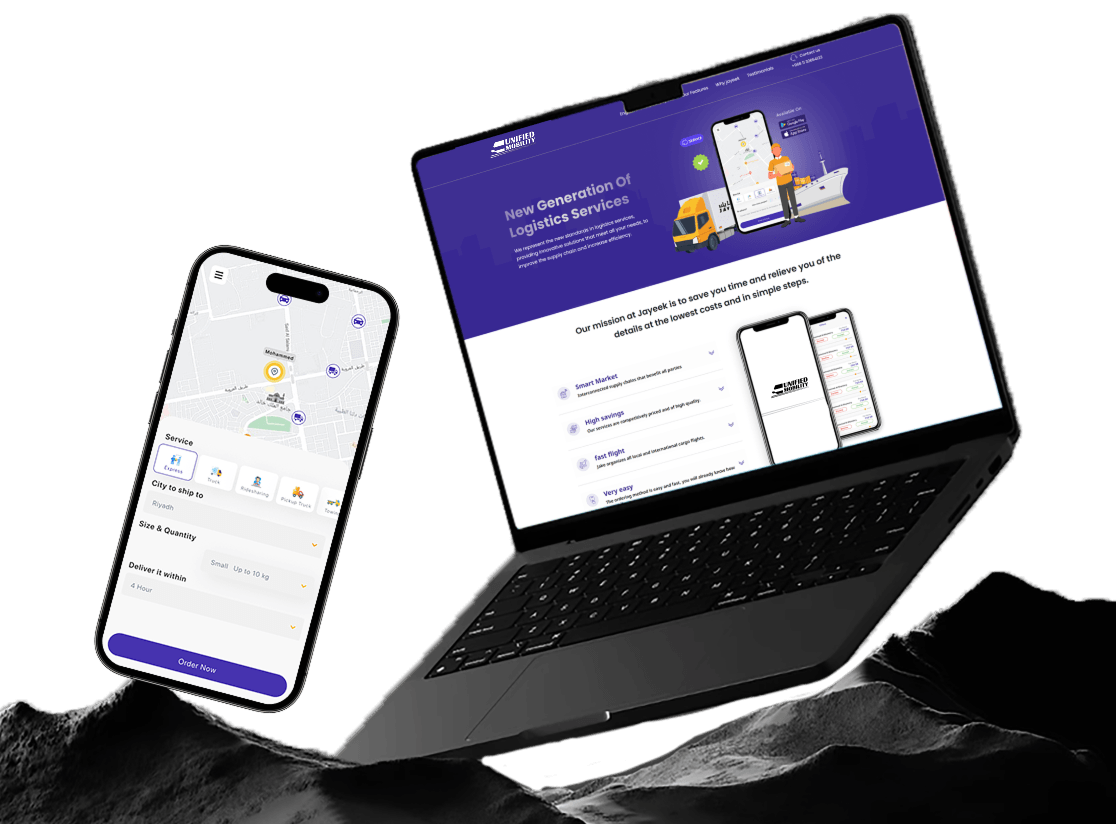

Vehicle tracking and monitoring
Real-time vehicle location, status and usage, with geofencing, route history and alerts, on web and mobile.
Fleet and Vehicle Management Software
InfoSparkles provides fleet management system development for logistics and transportation companies, taxi and ride-hailing operators, delivery and last-mile providers, corporate fleets and any business that runs a growing number of vehicles. We design and build secure, scalable platforms that bring vehicle tracking, drivers, maintenance, fuel, expenses and compliance into one system, so managers see what is happening across the fleet and costs stay under control.
Whether you are replacing spreadsheets and paper logs, adding live tracking to an existing operation or building a fleet product for other businesses, our team handles the full journey from requirements and design to development, device integration, rollout and long-term support. Fleet systems are part of our wider enterprise systems and SaaS development practice, and we have been delivering software for clients in the UAE, Europe, Australia, the United Kingdom and the United States since 2014.
A fleet management system is software that helps businesses manage vehicles, drivers and assets in one place. It typically combines real-time GPS tracking, vehicle and driver records, maintenance scheduling, fuel and expense tracking, compliance documents, alerts and reports, so managers can plan, monitor and control the whole fleet.
Managing vehicles, drivers, fuel, maintenance and compliance across a growing fleet is complex. Without a central system, location data sits in one tool, service records in a spreadsheet, fuel receipts in a folder and driver documents in email. Managers learn about problems after they happen: a missed service, an expired licence, a vehicle used for the wrong job or fuel costs that quietly rise. A fleet system brings this information together so problems are caught earlier and decisions use real data.
Every fleet system serves several groups. Fleet managers and dispatchers track vehicles, plan work and respond to alerts. Drivers see their vehicles, tasks and documents in a mobile app. Maintenance teams schedule and record services and repairs. Finance and compliance teams track costs, documents and reports.

Fleet operators choose between several approaches, and each fits a different stage.
Custom fleet management software is built around your vehicles, workflows and reports. Off-the-shelf fleet tools offer standard tracking and reports for common needs. Telematics devices and IoT trackers collect data from vehicles but need software to make it useful. Spreadsheets and paper logs work for a few vehicles and break down as the fleet grows.
| Option | What it provides | Best for |
|---|---|---|
| Custom fleet management software | Tracking, maintenance, costs and compliance built for your operation | Fleets with specific workflows or products built around fleet data |
| Off-the-shelf fleet tool | Standard tracking and reports | Small fleets with standard needs |
| Telematics device | Raw vehicle and location data | A data source for any fleet software |
| Spreadsheets and paper logs | Manual records | Very small fleets |
Most fleet projects combine custom software with telematics devices from established providers, so you choose the hardware and own the software and the data.
Where a Fleet System Pays Back. A fleet system pays back through lower fuel and maintenance costs, fewer breakdowns and less downtime, better vehicle utilization, improved driver safety and easier compliance, and it gives managers live visibility instead of after-the-fact reports. For companies building fleet products to sell to others, the usual models are monthly subscriptions per vehicle and paid modules.
Limited visibility into vehicle location and usage. Without live data, managers cannot answer where a vehicle is or how it is used. Real-time tracking and status monitoring give a live view of the fleet.
Inefficient route planning and fuel consumption. Poor routes and idling waste fuel. Route tools, fuel tracking and alerts reveal where fuel is lost.
Manual maintenance scheduling and tracking. Missed services lead to breakdowns. Preventive maintenance schedules, reminders and service histories keep vehicles reliable.
Difficulty monitoring driver behavior and safety. Harsh driving raises risk and cost. Driver behavior analytics and scorecards support coaching and safer driving.
Compliance and regulatory management challenges. Expired licences, insurance and inspections create risk. Document management with expiry alerts keeps the fleet compliant.
High operational and maintenance costs. Costs are hard to control when they are scattered. Cost tracking by vehicle, driver and job shows where money goes.
Lack of actionable fleet performance insights. Data without analysis does not change behavior. Dashboards and reports turn fleet data into decisions.
Real-time vehicle location, status and usage, with geofencing, route history and alerts, on web and mobile.
Driver and vehicle records, assignments, documents, access control and onboarding, alongside our on-demand driver platforms for independent drivers.
Preventive schedules, work orders, service history, parts and cost tracking, and breakdown and issue reporting.
Fuel consumption monitoring, fuel card and receipt tracking and expense reporting by vehicle, driver and trip.
Licences, insurance, inspections and permits stored per vehicle and driver, with expiry reminders and audit-ready records.
Driver and manager apps built in Flutter by our mobile application development team, with web dashboards and reports, similar to our admin control panel development.
Real-time GPS vehicle tracking, vehicle status and usage monitoring, geofencing and route monitoring, driver behavior and safety analytics, task assignment, alerts for speeding, idling and unauthorized use, and live maps and dashboards.
Preventive maintenance scheduling, service history and cost tracking, fuel consumption monitoring, breakdown and issue reporting, expense tracking, cost analysis by vehicle and driver, and operational reports.
Centralized fleet and asset management, driver onboarding and access control, custom reports and exports, and compliance documents with expiry alerts. A cloud-based, high-availability architecture with IoT and telematics integration support and an API-first design connects the system to ERP, logistics and third-party tools.
A fleet system depends on data from many sources. We integrate:
Trackers and telematics providers that offer APIs or standard protocols, with the hardware chosen by you.
Fuel sensors, temperature sensors, OBD readers and other devices, where the device supports an integration.
Mapping APIs for live maps, geofences, route history and distance calculations.
Costs, assets and invoices shared with our ERP development and integration work and accounting tools.
Orders, jobs and delivery status from your logistics software, see also our work for logistics and supply chain businesses.
Email, SMS and push alerts, and our business intelligence platforms for deeper analysis.
| Factor | Off-the-shelf fleet software | Custom fleet management system |
|---|---|---|
| Time to start | Fast | Months, delivered in phases |
| Upfront cost | Lower | Higher |
| Ongoing cost | Per-vehicle subscriptions that grow with the fleet | Hosting and maintenance, no per-vehicle fees |
| Fit with your operation | Standard features and reports | Built around your vehicles, workflows and reports |
| Hardware | Often tied to specific devices | Works with devices you choose |
| Integrations | Vendor-supported only | Built around your ERP, logistics and tools |
| Ownership | Vendor owns the software and data | You own the code and all data |
Off-the-shelf software suits small fleets with standard needs. Custom development makes more sense when per-vehicle fees grow with the fleet, when your workflows or reports are specific, when you want to choose your own hardware or when fleet data is part of the product you sell. For a wider view, read how custom software development helps businesses scale faster.
Cost depends on scope, and we provide a clear estimate after a short discovery phase. These factors have the biggest influence:
Tracking alone is smaller than tracking, maintenance, fuel, compliance and reporting together.
Each type of telematics device, sensor or data provider adds integration work.
Large fleets that send frequent location updates need a data architecture built for scale.
Custom reports, driver scoring and cost dashboards extend the build.
Driver and manager apps and connections to ERP and logistics systems add scope.
Most clients start with tracking and the modules that save the most money, then add maintenance, compliance and analytics in phases. Tell us about your fleet and we will send a free, no-obligation estimate.
A focused system with live tracking, vehicle and driver records, alerts and basic reports typically takes around three to five months. A complete platform with maintenance, fuel and expense management, compliance, device integrations, mobile apps and analytics usually takes six to nine months or more, delivered in phases.
We map your vehicles, drivers, workflows, devices and reports, and define the launch scope.
Our architects design a data pipeline that handles many vehicles and frequent updates, while our UI and UX design team designs dashboards and driver apps as clickable prototypes.
We build in short sprints with regular demos, adding tracking, maintenance, fuel and compliance module by module.
We test device data, alerts, reports and permissions with realistic data volumes, plus performance and security testing.
We launch on scalable infrastructure managed through our cloud and DevOps services, connect your devices, migrate records and train your team.
We monitor performance, fix issues quickly and add modules, devices and reports as your fleet grows.
We choose technology for real-time data, reliability and scale. Final choices are confirmed during discovery.
Frontend
 React
 Next.js
 Vue
Backend
 Node.js
 Python
 PHP
Mobile
 Flutter for iOS and Android
Data and caching
 PostgreSQL
 MySQL
 MongoDB
 Redis
Real-time
 Firebase
 WebSockets
Cloud
 AWS
 Microsoft Azure
Integrations
 Google Maps APIs
 Telematics
 ERP
 Accounting
Role-based access. Managers, dispatchers, drivers, mechanics and finance teams see only the vehicles and data their role allows.
Data protection. Vehicle and driver data is encrypted in transit and at rest, driver location is handled according to your policies, and systems are designed to support GDPR, UK GDPR, the UAE Personal Data Protection Law, CCPA and CPRA and the Privacy Act 1988 in Australia.
Compliance records. Licences, insurance, inspections and permits are stored per vehicle and driver with expiry alerts and audit trails.
Secure device connections. Device and provider integrations use authenticated connections, with monitoring for failed or missing data.
We add AI where fleet data can save money and prevent problems: predictive maintenance that flags vehicles likely to need service based on usage and history; route and fuel optimization that suggests better routes and highlights wasteful idling; driver scoring that turns harsh braking, speeding and idling into coaching insights; anomaly detection that flags unusual fuel use, location or vehicle usage; and report summaries that explain fleet performance in plain language. These capabilities are part of our wider AI-driven automation services.
Built for Operational Excellence
10+ years of custom software development experience
Proven expertise in fleet and logistics platforms
Scalable, cloud-ready system architecture
Real-time tracking, maintenance and cost control
Transparent communication and project delivery
Long-term support and continuous optimization
We don't just track vehicles. We build fleet systems that cut costs and keep every vehicle on the road.
A fleet management system is software that helps businesses manage vehicles, drivers and assets in one place, with real-time tracking, maintenance scheduling, fuel and expense tracking, compliance documents, alerts and reports.
Yes. We build fleet systems around your vehicles, workflows, reports and integrations. You own the full source code and data, with no per-vehicle licence fees.
In many cases yes. We integrate with trackers and telematics providers that offer APIs or standard protocols, and we advise on devices if you are choosing new hardware.
Yes. We build maintenance schedules based on mileage, engine hours or dates, with reminders, work orders, service history and cost tracking for each vehicle.
Yes. Where devices provide the data, we track events such as speeding, harsh braking and idling, and turn them into driver scorecards and coaching reports.
Licences, insurance, inspections and permits are stored for each vehicle and driver, with expiry alerts and records that support audits.
Cost depends on the modules, devices and data sources, fleet size, reports and analytics, and apps and integrations. Most clients start with tracking and the modules that save the most money. We provide a free estimate after a short discovery conversation.
A focused system typically takes around three to five months. A complete platform with maintenance, fuel, compliance, device integrations and apps usually takes six to nine months or more, delivered in phases.
Yes. We provide ongoing maintenance, monitoring, security updates and new modules and reports after launch.
Case Study
Whether you are replacing spreadsheets, adding live tracking or building a fleet product of your own, we are ready to help. Tell us about your fleet, vehicles and goals, and we will recommend the right modules, devices and a realistic plan to launch.