Custom software development helps businesses scale faster by removing the operational bottlenecks that stop growth. Instead of adding more people, more spreadsheets and more subscriptions every time demand rises, a business with software built around its own processes can handle more customers, more orders and more complexity with roughly the same team. Custom software automates repetitive work, connects disconnected systems, supports new revenue models and runs on architecture designed to grow with the business rather than hold it back.
Most companies start with off-the-shelf tools, and that is usually the right decision early on. A few affordable apps can run a young business perfectly well. The trouble begins when growth arrives. Processes that worked for fifty orders a week start breaking at five hundred. Teams spend hours copying data between tools that do not talk to each other. Subscription costs climb with every new hire. And the one feature that would give the business an edge simply does not exist in any product on the market.
This guide explains how custom software development helps businesses scale, where it delivers the biggest gains, how it compares with off-the-shelf software, what it costs and how to plan a project that pays for itself. Along the way we share examples from platforms we have built for clients across Europe, the Middle East, Australia, Asia and the United States.

Growth and scale are often used as if they mean the same thing, but they do not. Growth means adding revenue by adding resources at roughly the same rate. If you double your sales by doubling your staff, office space and costs, you have grown, but your business model has not improved.
Scaling means increasing revenue significantly faster than costs. A business that doubles its sales while increasing costs by only a fraction has scaled. Its margins improve as it gets bigger, and each new customer becomes more profitable than the last.
Technology is one of the main factors that decides which of the two happens. When systems are manual, fragmented or limited, every extra unit of demand needs an extra unit of human effort. When systems are automated, connected and built to handle volume, the business can absorb growth without matching increases in headcount and overhead. That is the core reason custom software and scaling are so closely linked.
Custom software development is the process of designing, building and maintaining software for a specific business, its processes, its customers and its goals. It contrasts with off-the-shelf software, sometimes called commercial off-the-shelf or packaged software, which is built for a broad market and sold to many companies in the same form.
Custom software can take many shapes. It might be a customer-facing platform such as an online marketplace, a booking system or a mobile app. It might be an internal tool such as an ERP, a CRM, an operations dashboard or a workflow automation system. It might be a SaaS product that the business sells to its own customers. Or it might be an integration layer that connects existing tools into one reliable flow of data.
What these have in common is fit. Rather than changing the way a business works to match a product’s limitations, custom software is shaped around the way the business actually operates and the way it wants to operate as it grows. You can see the range of what this covers in our overview of custom software development services.
Many businesses do not realize their tools have become a constraint until the symptoms are hard to ignore. These are the most common warning signs.
Your team relies on spreadsheets to fill gaps – When critical data lives in spreadsheets that people update by hand, errors multiply and nobody fully trusts the numbers. Spreadsheets are excellent tools, but they are not systems of record for a growing business.
Data is entered more than once – If an order is typed into your store, then your accounting software, then your warehouse tool, you are paying people to do work a machine should do, and you are creating chances for mistakes at every step.
You are paying for many overlapping subscriptions – Growing companies often accumulate tools one at a time until they have a patchwork of apps with overlapping features, separate logins and per-user fees that rise with every hire.
Workarounds have become normal – When staff say “the system cannot do that, so we do it manually,” the software is shaping the business rather than serving it.
Performance drops at busy times – Pages slow down, checkouts fail or dashboards time out during peaks. That is often a sign the platform was not designed for the load it now carries.
You cannot launch the product or service you want – A new pricing model, a partner portal or a marketplace feature is blocked because your current tools do not support it and no vendor plans to add it.
Reporting takes days – If leaders wait for someone to compile a weekly report by hand, decisions are always based on old information.
If several of these sound familiar, your business has likely outgrown its tools, and custom software is worth serious consideration.
Automation is the most direct way software helps a business scale. Tasks such as processing orders, generating invoices, assigning jobs, sending reminders, updating stock and reconciling payments follow predictable patterns. When those patterns are built into software, the work happens instantly and consistently, whether you handle ten transactions a day or ten thousand.
Custom software can automate the exact workflows your business depends on, including the unusual exceptions that generic tools cannot handle. Modern AI-driven automation goes further, handling tasks that involve judgment, such as reading unstructured documents, triaging support requests or matching supply with demand. The result is a team that spends its time on customers, strategy and improvement instead of data entry.
Disconnected tools create data silos. Sales sees one version of a customer, finance sees another and operations sees a third. Every handoff between systems is a delay and a risk of error, and leaders cannot get a reliable picture of the business.
Custom software solves this in two ways. It can replace several disconnected tools with one integrated platform, or it can act as an integration layer that connects the tools you want to keep. Either way, information flows automatically and every team works from the same accurate data.
A good example is Struct, a construction ERP we built for a client in the UAE. It brings twelve operational modules into a single system, so project, procurement, finance and site data no longer live in separate places. Integrated enterprise systems and SaaS platforms like this remove the manual reconciliation that slows growing companies down.
Scalability is partly a business question and partly a technical one. A platform that works for a thousand users can fail at a hundred thousand if it was never designed for that load. Custom software lets you plan for growth from the beginning, choosing architecture, databases, caching and hosting that match where the business is going, not just where it is today.
For Laptop Commerce, a large-scale eCommerce business in Australia, that meant building on technologies such as Elasticsearch for fast search across a big catalog and Redis for caching, so the store stays responsive as traffic and product counts grow. For Fairbay, an enterprise marketplace in Sri Lanka, it meant a platform that manages around 5,000 product categories without becoming slow or unmanageable. You can read more in the Fairbay enterprise eCommerce case study.
Some of the biggest scaling opportunities come from changing how a business earns money, not just how much of it. Moving from one-off sales to subscriptions, from selling your own stock to running a marketplace, or from a service business to a software product can transform the economics of a company. These models usually need software that does not exist off the shelf.
Tourysta, an activities marketplace in Portugal, needed a four-way commission engine that splits each booking between the platform, suppliers, resellers and partners, plus integration with the Bókun booking system used across the tourism industry. MyInvite, a US invitation platform, needed usage-based billing tied to how customers actually use its AI features. Jayeek, an on-demand transport and towing platform in the UAE, needed a driver bidding system that no standard tool provides. In each case, custom logic was what made the business model possible. This is the kind of work behind our marketplace and mobility platform development and our booking and reservation platforms.
A business can only scale as fast as it can make good decisions. When reporting depends on manual exports and spreadsheet work, leaders see what happened last week or last month. By the time a problem shows up in the numbers, it has already cost money.
Custom software can capture the data that matters to your business at the moment it is created and present it in dashboards designed around your key metrics. Wowin, a campervan dealership in Switzerland, needed to track margin on every individual vehicle, including consignment stock owned by third parties, something generic dealership tools could not do cleanly. With per-unit margin tracking built into its custom CRM, the business can see exactly where profit comes from and act on it.
Off-the-shelf software often looks cheaper at the start, and for a small team it usually is. But subscription pricing is typically tied to users, transactions or data volume, which means costs rise in step with growth. Over several years, a growing company can pay far more in cumulative fees for a collection of tools than it would have spent building exactly what it needed.
Custom software reverses that curve. The main investment comes up front, and after launch the costs are hosting, maintenance and improvements, none of which scale directly with the number of employees. Just as importantly, the business owns the software and the code, so there is no risk of a vendor raising prices, changing terms or discontinuing a product the company depends on.
If your competitors can buy the same software you use, that software cannot be what sets you apart. Custom software lets you build the workflows, customer experiences and features that make your business different, and it keeps those advantages in-house.
Tendrix, a trade tendering platform we delivered in Germany, is a good illustration. It tracks commissions on deals that close off the platform and keeps a timestamped audit trail of every step, capabilities that protect its revenue and build trust with users in a way generic tendering tools do not. Differentiators like these compound over time, because each improvement is built on a foundation competitors do not have.
Customers expect fast, personal and consistent experiences across web and mobile. As a business grows, delivering that becomes harder, because there are more customers, more channels and more ways for things to go wrong.
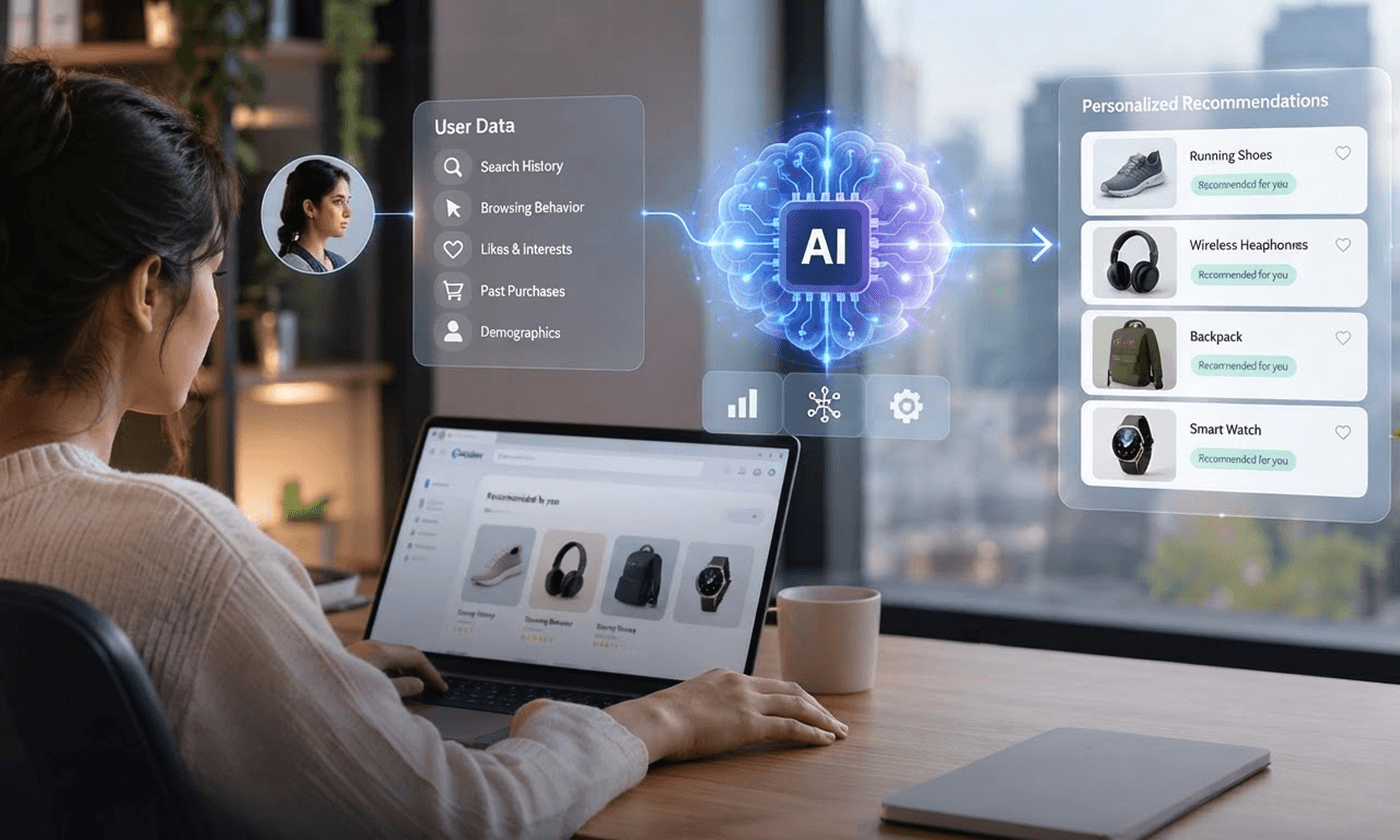
Custom software makes the experience you want possible and repeatable. That can mean a mobile app built around your customers’ journey, a self-service portal that lets clients manage their own accounts, or personalization that shows each visitor the most relevant products. A custom AI recommendation engine, for example, lets an online store personalize every visit automatically, raising revenue per customer without adding staff. If you are new to the idea, our guide on what an AI recommendation engine is and how it works explains it in detail.
Growth brings more data, more users and more scrutiny. Larger clients ask harder questions about security, and regulators expect businesses to protect personal data properly under laws such as GDPR in Europe, UK GDPR in the United Kingdom, CCPA and CPRA in California and the Privacy Act 1988 in Australia.
With custom software, security and compliance can be designed in from the start: role-based access, encryption, audit logs, data retention rules and hosting in the regions your customers require. That is far easier and cheaper than trying to add controls to a patchwork of tools later, and it makes it easier to win the larger contracts that often come with growth.
AI is changing how businesses operate, but it can only work with the data and systems it can reach. Companies running on disconnected tools and manual processes struggle to adopt AI in any meaningful way, because their data is scattered and their workflows are not digital end to end.
Custom software creates the clean data, integrated systems and flexible architecture that make AI practical. Once the foundation is in place, adding capabilities such as intelligent automation, forecasting, smart matching or personalization becomes an extension of the platform rather than a separate, risky project.
Choosing between custom and off-the-shelf software is not about which is better in general. It is about which fits your business at its current stage and for where it is going.
| Factor | Custom software | Off-the-shelf software |
|---|---|---|
| Fit with your processes | Built around how you work | You adapt to how it works |
| Upfront cost | Higher | Lower |
| Long-term cost as you grow | Stable, not tied to headcount | Rises with users and volume |
| Time to start using it | Weeks to months | Days |
| Scalability | Designed for your growth plans | Limited by vendor’s plans and pricing tiers |
| Integration | Built to connect with your stack | Depends on available connectors |
| Competitive advantage | Unique to you | Same tools your competitors use |
| Ownership and control | You own the code and data | Vendor controls the roadmap and terms |
| Maintenance | Your team or your development partner | Handled by the vendor |
Off-the-shelf software makes sense for functions that are standard across most businesses and are not a source of competitive advantage. Email, basic accounting, payroll, office productivity and video calls are good examples. It is also often the right choice for early-stage companies still validating their business model, when speed and low upfront cost matter most.
Custom software makes sense when a process is central to how your business creates value, when you have outgrown the limits of packaged tools, when subscription costs are rising faster than revenue, when you need to support a business model that products do not handle, or when the software itself is part of what you sell.
In practice, most scaling businesses combine the two. They keep proven off-the-shelf tools for standard functions and build custom software for the processes that make them different, connecting everything through integrations so data flows cleanly. This gives them the speed and economy of packaged tools where it makes sense and the power of custom software where it matters most.
“Scalable” is one of the most used words in software, and one of the least explained. Here is what it actually involves.
Vertical and horizontal scaling – Vertical scaling means giving a server more power, such as more memory or processing capacity. It is simple but has limits. Horizontal scaling means adding more servers and spreading the load between them. Well-designed software can scale horizontally, which allows it to grow almost without limit and to survive the failure of any single machine.
Cloud infrastructure – Cloud platforms such as AWS, Google Cloud and Microsoft Azure let software add or remove capacity automatically as demand changes, so a business pays for what it uses and handles traffic spikes without buying hardware in advance.
Modular architecture – Scalable systems are built from separate parts that can be improved, replaced or scaled independently. For some platforms this means microservices, where each function runs as its own service. For many growing businesses a well-structured modular monolith is simpler and just as effective in the early years. A good development partner chooses based on your actual needs rather than trends.
Caching and search – Frequently requested data can be stored in fast memory so the system does not recalculate it on every request, and dedicated search engines handle large catalogs far more efficiently than a standard database.
Background processing – Tasks that do not need to happen instantly, such as sending emails, generating reports or processing images, are placed in queues and handled in the background, so the user experience stays fast even under heavy load.
Clean, maintainable code – Scalability is not only about traffic. It is also about how quickly your team can add features as the business evolves. Code that is well structured, documented and tested lets you move fast for years. Code that is rushed becomes technical debt that slows every future change.
The cost of custom software varies widely because every project is different. A focused internal tool is a much smaller investment than a multi-sided marketplace with mobile apps and complex payments. The main factors that affect cost are the number and complexity of features, the number of user types and platforms such as web, iOS and Android, integrations with other systems, data migration from existing tools, security and compliance requirements, and the level of design polish needed.
Rather than focusing on the price of the build alone, it is more useful to think about total cost of ownership and return on investment. On the cost side, include the build, hosting, maintenance and future improvements. On the return side, include hours saved through automation, subscription fees eliminated, errors avoided, revenue from new business models and faster growth enabled by better customer experiences. For many businesses, the savings from replacing several per-user subscriptions and manual processes alone cover the investment within a reasonable period, before counting any new revenue.
The most reliable way to manage cost and risk is to build in phases. Start with a minimum viable product, the smallest version that solves the most important problem, launch it, learn from real use and then expand. This keeps early spending controlled and ties further investment to proven results.
Custom software delivers strong returns when done well, but projects can go wrong. McKinsey research on large IT projects, conducted with the University of Oxford, found that on average they run 45 percent over budget and 7 percent over schedule while delivering 56 percent less value than predicted, according to its report on delivering large-scale IT projects on time, on budget and on value. The good news is that the causes are well understood.
Unclear requirements – Projects that start without a clear understanding of goals, users and priorities tend to drift. A proper discovery phase before development is the best protection.
Scope creep – New ideas appear constantly during a project. Without a process for prioritizing them, timelines and budgets expand. Phased delivery, with a clear definition of what is in each release, keeps scope under control.
Technical debt – Shortcuts taken to hit a deadline make every later change slower and more expensive. Stripe’s Developer Coefficient report found that developers spend around 17 hours a week dealing with maintenance issues such as bad code, debugging and refactoring. Investing in code quality, testing and documentation from the start pays off for years.
Dependence on a single developer or agency – If only one person understands your system, or your partner keeps the code, your business is exposed. Insist on full ownership of your source code, clear documentation and access to your hosting and repositories.
Poor communication – Many failed projects are communication failures rather than technical ones. Regular demos, transparent progress tracking and a single accountable point of contact keep everyone aligned.
A structured process is what separates projects that deliver value from projects that stall. Here is the approach that works best for most growing businesses.
Step 1: Define the business problem – Start with outcomes, not features. What bottleneck are you removing, what revenue are you unlocking or what cost are you cutting? Clear goals make every later decision easier.
Step 2: Run a discovery phase – Map current workflows, interview the people who will use the system, review existing tools and data and define requirements in priority order. Discovery produces a realistic scope, timeline and budget before major investment begins.
Step 3: Design the experience and architecture – Create wireframes and designs so users can see and react to the product early, and choose an architecture and technology stack that fit your growth plans, budget and team.
Step 4: Build an MVP in short cycles – Develop the most important features first in short sprints, with regular demos so you can give feedback and adjust direction before small issues become expensive ones.
Step 5: Test thoroughly – Combine automated testing with manual testing, performance testing under realistic load and security testing, so the platform is reliable from day one.
Step 6: Launch, measure and improve – Release to real users, track how the software is used and whether it delivers the expected outcomes, then plan the next phase based on evidence.
Step 7: Maintain and scale – Keep the platform secure, updated and fast, and keep adding features as the business grows. Good software is never truly finished, because the business it supports keeps changing.
The partner you choose has as much influence on the outcome as the technology. When evaluating a custom software development company, look for relevant experience with projects similar to yours in complexity and industry, and ask to see live examples and case studies rather than just screenshots. Check independent reviews on platforms such as Clutch, GoodFirms and Google, and speak to past clients where possible.
Ask how they run discovery, how they estimate, how often you will see working software and who your day-to-day contact will be. Confirm in writing that you will own the source code and intellectual property, and that you will have access to repositories and hosting accounts. Ask about their approach to testing, security and documentation, and about support after launch. Finally, pay attention to communication during the sales process itself. A partner who listens carefully, asks sharp questions and explains trade-offs honestly before you sign is likely to do the same during the project.
The principles are the same across sectors, but the bottlenecks differ.
eCommerce and retail – Growing retailers need fast storefronts, accurate inventory across channels, automated order processing and personalization. Custom enterprise eCommerce development addresses the limits that appear as catalogs and traffic grow. Read more about our work with eCommerce and retail businesses.
Logistics and supply chain – Real-time tracking, dispatch optimization, route planning and automated documentation let logistics companies handle more shipments without adding more coordinators. See how software supports logistics and supply chain operators.
Real estate and property management – Property businesses scale through portals that manage listings, bookings, tenants, maintenance and payments in one place, such as our property rental and PMS solutions. More on our work in real estate.
Travel and hospitality – Operators grow by selling more inventory through more channels, which depends on reliable availability, payments and integrations with booking networks. Learn how we support travel and hospitality businesses.
Fintech and financial services – Financial platforms must scale transactions while staying secure and compliant, which makes architecture and audit trails critical from day one. See our work in fintech and banking.
Service businesses and aggregators – Businesses that coordinate many providers and customers, such as home services or professional services, scale through platforms that automate matching, scheduling and payments. Our service aggregator platform is built for exactly that.
Custom software helps a business scale by automating repetitive work, connecting disconnected systems, supporting new revenue models and running on architecture designed for growth. This lets the business handle more customers and transactions without increasing headcount and costs at the same rate.
The main benefits are a close fit with your processes, automation of manual work, integration across systems, scalability, lower long-term cost as you grow, full ownership of the code, stronger security and compliance, and features that give you a competitive advantage your rivals cannot simply buy.
Neither is better in every case. Off-the-shelf software is ideal for standard functions such as email and payroll and for early-stage businesses. Custom software is better for processes that are central to how you create value, for businesses that have outgrown packaged tools and for business models that products do not support. Most growing companies use both.
Cost depends on the number and complexity of features, the platforms involved, integrations, data migration and compliance requirements. Building in phases, starting with a minimum viable product, keeps early investment controlled and ties further spending to proven results. A discovery phase gives you a reliable estimate before development begins.
A focused MVP can often be delivered in a few months, while larger platforms with multiple user types, mobile apps and complex integrations are built in phases over a longer period. Phased delivery means you start seeing value early rather than waiting for everything to be finished.
Common signals include heavy reliance on spreadsheets, duplicate data entry, rising subscription costs, frequent manual workarounds, performance problems during busy periods, slow reporting and plans for a product or business model that current tools cannot support.
You should. A reputable development partner will transfer full ownership of the source code and intellectual property to you and give you access to your repositories and hosting. Confirm this in your contract before the project begins.
Yes. Custom software can integrate with accounting systems, CRMs, payment gateways, eCommerce platforms, booking networks and many other tools through APIs, so you can keep the tools that work well and connect them into one reliable flow of data.
Custom software development helps businesses scale faster because it turns growth from a cost problem into an efficiency gain. By automating repetitive work, connecting systems into a single source of truth, supporting new revenue models, delivering better customer experiences and running on architecture built for growth, it allows a business to serve more customers without adding cost at the same pace.
It is not the right answer for every function or every stage. Off-the-shelf tools remain the smart choice for standard needs and early experiments. But once a process becomes central to how your business creates value, or your tools start limiting what you can do, custom software is often the most direct route to scaling profitably.
If you are unsure where software is holding your business back, a short review of your current systems is the best place to start. Our team will look at your workflows, tools and growth plans and show you where custom software would have the biggest impact, whether that is automation, integration, a new platform or a mobile app.
At Infosparkles, we help businesses grow with smart IT solutions,
modern web development, and innovative digital services.
Have a project idea or need technical support?
Our team is ready to help you.
Leverage intelligent systems and scalable tech to stay ahead.
"Infosparkes IT is responsive - highly capable and their website development team is first class- in all aspects from graphics to forms to features to user-friendly design. Before using them I looked at a lot of other options and after seeing their past work it was an easy decision. And the result is brilliant . And affordable . A big shout out to Rohit who handles the communication aspect."
Zac Warat Australia
"I had a fantastic experience working with InfoSparkles. From the very beginning, they provided top-notch service, but what really sets them apart is their optimal customer support even after the project was completed. They don’t just deliver and disappear; they make sure everything runs perfectly in the long run.
Whether it’s apps or websites, the results are high-quality, and the entire development process is actually fun! You can really tell that the team is happy and motivated – just like you see in their photos. They are upbeat, professional, and a joy to work with. Highly recommended for anyone looking for great results and a positive partnership."
"We had an amazing experience working with Info Sparkles on our website project. From the very beginning, their team was professional, creative, and truly understood our vision. They guided us through every step — from design to functionality — and made the entire process smooth and stress-free. The final website turned out even better than we imagined — modern, user-friendly, and perfectly aligned with our brand. They were always available for our questions, gave us valuable suggestions, and delivered everything on time. We are extremely happy with the results and would highly recommend Info Sparkles to anyone looking for a reliable and talented web development partner. Thank you for helping us bring our vision to life!"
Anuj India"This was a great experience working with this Team. The project was large and involved mowing close to 200,000 images to a new Gallery Format. Issues faced were consistent poor Server performance, which they overcame with great patience. Then this was followed by moving the whole website to a new ugraded server in the midst of massive Bot Ddos attacks. All of this they achieved without the slightest sign of frustration. Well done, well above average performance."
Steve Australia"I have been working with them for the past few years on various projects, one of the best companies i have worked with, amazing team, delivers on time, understands the projects fully, very helpful, give advise on the best way to create and make the project more efficient .... will continue working with them for our next projects. highly recommended"
Nasser United Arab Emirates"Excellent team & output! They built high-end Android & iOS apps and backend from scratch, delivering results similar to giants like Temu & AliExpress. With just the Figma design, they quickly understood and implemented the logic with minimal clarifications. Powerful, highly skilled, intelligent team that brings ideas to life, overcomes challenges, and is polite, flexible, and easy to work with. Backend Tech stack: MySQL, NodeJS, React. Pleasure to work with InfoSparkles. I'll keep hiring!"
Mohammed Sri Lanka"I recently had the pleasure of working with Infosparkles IT Solution on a web application project, and I couldn't be more satisfied with the results. From the very beginning, Harish and team demonstrated a deep understanding of the requirements and brought innovative ideas to the table that significantly improved the functionality and user experience of the application. I highly recommend Infosparkles IT Solution to anyone looking for a reliable, skilled, and creative freelancer. Infosparkles IT Solution is an exceptional team. They excel at interpreting and implementing project requirements, and their communication is outstanding. Their proactive approach to suggesting solutions and their responsiveness were impressive. Despite our project's complexity, they worked tirelessly to complete it. I highly recommend their services."
Durya USA



You may share your requirements at contact@infosparkles.com and our team will get back to you right away.