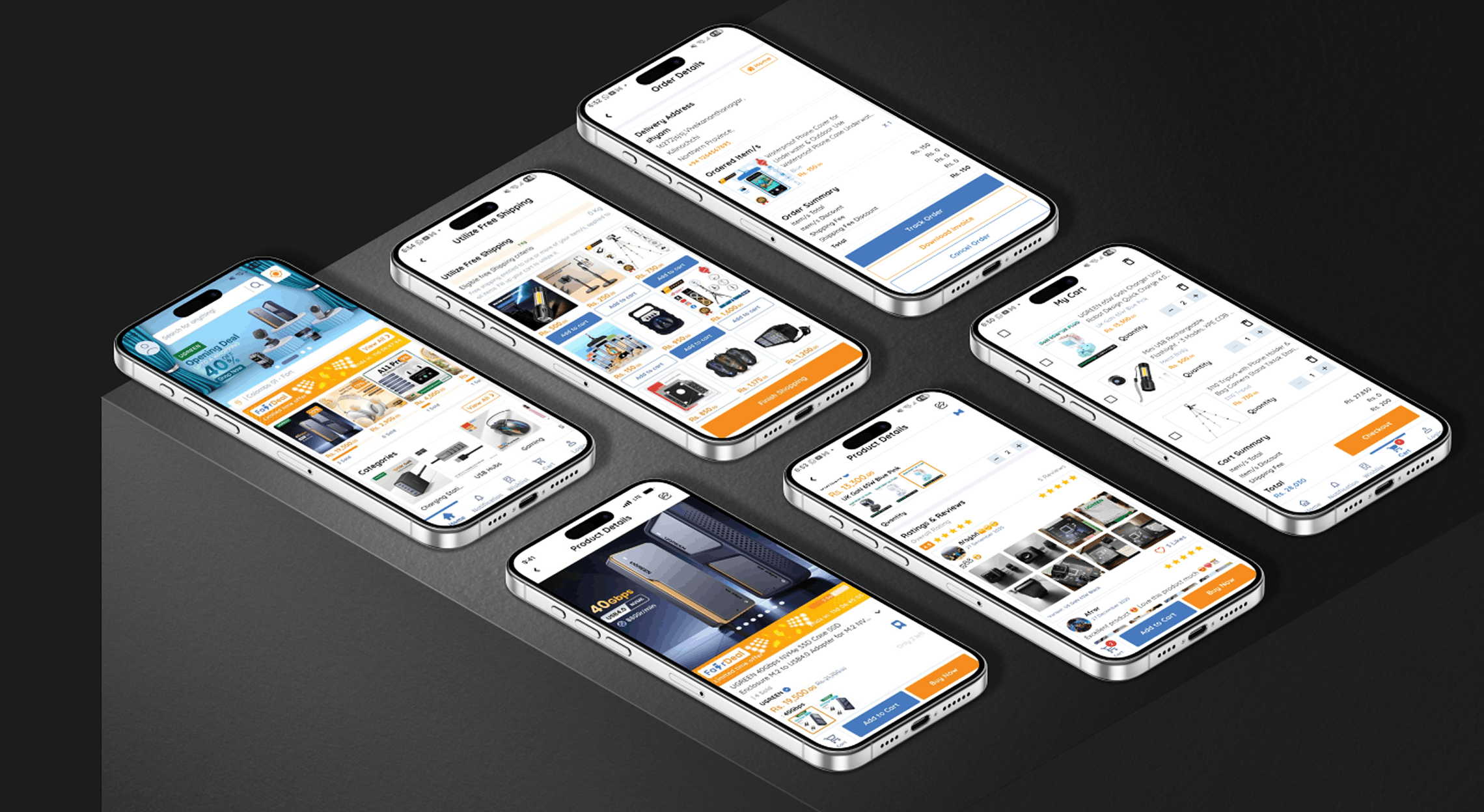

Headless storefronts
Fast, SEO-friendly storefronts in React and Next.js with server rendering, caching and rich interactions, connected to your commerce back end.
Headless Commerce Solutions
InfoSparkles provides headless commerce solution development for retailers, brands, marketplaces and enterprises that want a faster, more flexible storefront than a traditional all-in-one platform allows. We design and build headless architectures that separate the customer-facing front end from the commerce back end, with API-first catalog, cart, checkout, pricing and order services, modern storefronts built in frameworks such as Next.js, and the integrations that connect everything.
Whether you want to speed up an existing store, serve the web, mobile apps and in-store screens from one commerce back end or move away from a monolithic platform step by step, our team handles the full journey from architecture and migration planning to development, integration, launch and long-term support. Headless commerce is part of our wider enterprise systems and SaaS development practice, and we have been delivering software for clients in the UAE, Europe, Australia, the United Kingdom and the United States since 2014.
Headless commerce is an architecture where the front end of a store, the "head" that customers see, is separated from the back end that handles products, prices, carts, checkout and orders. The two communicate through APIs. The front end can be built with any modern technology and can power websites, mobile apps, kiosks, marketplaces and social channels, while the back end serves them all from one source of truth.
In a traditional platform, the storefront and the commerce engine are tied together. That is simple to start with, but it limits speed and design: pages are slow, themes are hard to customize and every new channel needs another build. With headless commerce, teams can design fast, distinctive experiences, change the front end without touching the back end and add channels without duplicating logic. The cost is more architecture and integration work, which is why it suits growing and complex businesses more than simple stores.
Headless commerce serves several groups. Shoppers get fast, consistent experiences on every channel. Front-end and product teams build and change experiences quickly. Merchandisers and operations teams manage products, prices and orders in one back end. Engineering and IT teams integrate services and scale each part independently.
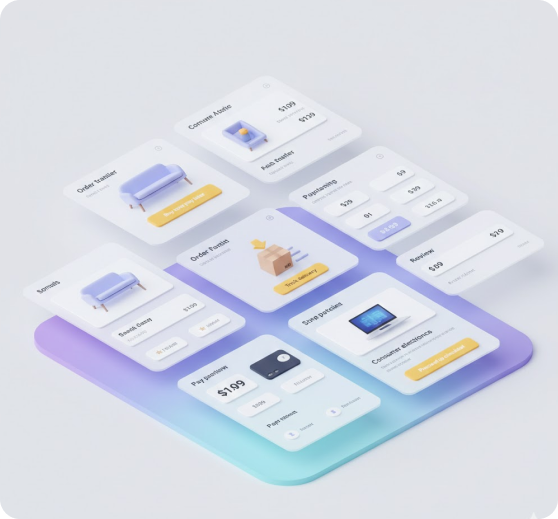
There are several architectures for online stores, and each fits a different stage.
A monolithic platform such as a standard hosted or open-source store couples the front end and back end. Headless commerce separates them and connects them through APIs. Composable commerce goes further, assembling best-of-breed services for search, content, checkout and more. A decoupled setup keeps an existing platform as the back end while replacing its storefront.
| Architecture | How it works | Best for |
|---|---|---|
| Monolithic platform | Front end and back end in one product | Simple stores with standard needs |
| Headless commerce | Separate front end connected to a commerce back end by APIs | Businesses needing speed, custom experiences or many channels |
| Composable commerce | Best-of-breed services assembled together | Large businesses with complex requirements and strong engineering |
| Decoupled storefront on an existing platform | New front end on the current back end | Businesses improving speed without changing the back end |
Many businesses start by decoupling the storefront on their current platform, then replace back-end services gradually as needs grow.
Where Headless Commerce Pays Back. Headless commerce pays back through faster pages and higher conversion, better search visibility from fast, well-structured pages, freedom to design and test new experiences, one back end for web, apps and other channels, independent scaling and easier change over time. It is an investment that pays back for businesses with enough traffic, channels or complexity.
Slow storefronts. Heavy themes and plugins slow pages. Modern front ends with server rendering and caching load much faster.
Limited design freedom. Themes constrain unique brand experiences. A custom front end gives full control of design and interactions.
Multiple channels, duplicated work. Each channel built on its own repeats logic. One API back end serves web, app, kiosk and marketplace channels.
Platform lock-in. A monolith makes change risky and slow. API boundaries let you replace parts without a full rebuild.
Traffic spikes and scaling. Sales events can overwhelm one big system. Front end and services scale independently.
Content and commerce silos. Marketing content and product data live apart. Headless content and commerce combine in one experience.
Complex integrations. Many systems need to connect. An API layer and event flows keep ERP, warehouse, payments and marketing in sync.
Fast, SEO-friendly storefronts in React and Next.js with server rendering, caching and rich interactions, connected to your commerce back end.
Catalog, pricing, cart, checkout, promotions and order services exposed through REST or GraphQL APIs, built to power every channel.
Replacing the storefront of your current platform with a headless front end, keeping the back end and moving at your pace. See also our eCommerce website development.
One back end serving websites, mobile apps from our eCommerce mobile app development, kiosks and marketplaces.
Assembling search, content, payments, promotions and other services into one coherent platform, with an integration layer to your ERP and warehouse systems.
Headless front ends for multi-vendor marketplaces and subscription commerce platforms.
Fast page loads, instant search and filters, rich product pages, smooth cart and checkout, consistent experience across web and apps, personalization, order tracking and accounts.
Content and product management in one place, landing page and campaign tools, promotions and pricing rules, A/B testing, previews, multi-language and multi-currency tools and performance reports.
API-first architecture with REST or GraphQL, server-side rendering and edge caching, modular services, event-driven integrations, search and personalization layers, role-based admin access, observability and a cloud-based architecture that scales parts independently.
A headless platform is defined by its connections. We integrate:
Custom commerce services or existing platforms through their APIs.
Headless content management systems for pages, banners and editorial content.
Search engines such as Elasticsearch and our AI-powered recommendation engines.
Payment gateways such as Stripe and PayPal, through our secure payment integration work.
Orders, stock and fulfilment shared with our ERP development and integration work and warehouse and carrier systems.
Customer data shared with our CRM solutions, plus email, SMS and analytics tools.
| Factor | Traditional all-in-one platform | Headless commerce solution |
|---|---|---|
| Time to launch | Fast | Longer, delivered in phases |
| Upfront cost | Lower | Higher |
| Performance | Depends on theme and plugins | Optimized front end with server rendering and caching |
| Design freedom | Limited by themes | Complete control |
| Channels | Mainly web, extra channels need more builds | Web, apps, kiosks and more from one back end |
| Change and scaling | Changes affect the whole platform | Parts change and scale independently |
| Engineering effort | Lower | Higher, with more architecture and integration |
| Ownership | Platform rules and roadmap apply | You own the front end and the integration layer |
A traditional platform is the right answer for many stores. Headless makes more sense when speed and experience are competitive advantages, when you sell through several channels, when you have outgrown theme limits or when engineering capacity is available to run a more flexible architecture. For a wider view, read how custom software development helps businesses scale faster.
Cost depends on scope, and we provide a clear estimate after a short discovery phase. These factors have the biggest influence:
Decoupling the storefront of an existing platform is smaller than building a new back end and storefront together.
A web storefront is smaller than web, mobile apps and other channels.
Custom catalog, pricing, promotions and checkout services add engineering.
ERP, warehouse, payments, search, content and marketing connections each add work.
Custom design systems, A/B testing and personalization extend the build.
Most clients start with a headless storefront on a clear back end, prove the gains in speed and conversion, then add channels and services in phases. Tell us about your current store and goals and we will send a free, no-obligation estimate.
A focused headless storefront on an existing back end typically takes around four to six months. A larger solution with a custom commerce back end, several channels, search, personalization and many integrations usually takes six to ten months or more, delivered in phases so the new front end can go live early.
We review your current platform, traffic, channels and systems, choose the headless approach and define a phased migration plan.
Our UI and UX design team designs a performance-minded design system and journeys as clickable prototypes.
We build in short sprints with regular demos, adding the storefront, APIs and integrations step by step.
We test speed, SEO output, purchase flows, failover and security, and compare results against the current store.
We launch on infrastructure managed through our cloud and DevOps services, moving traffic gradually and protecting search rankings with redirects.
We monitor performance, fix issues quickly and add channels and services as your business grows.
We choose technology for performance, flexibility and maintainability. Final choices are confirmed during discovery.
Frontend
 React
 Next.js
 Vue
Backend
 Node.js
 Python
 PHP
Mobile
 Flutter for iOS and Android
Data and search
 PostgreSQL
 MySQL
 MongoDB
 Redis
 Elasticsearch
Cloud
 AWS
 S3
 Microsoft Azure
Payments
 Stripe
 PayPal
 Razorpay
 Regional gateways
Integrations
 ERP
 CRM
 Accounting
 Email and chat
Secure checkout. Certified payment providers with tokenization keep card data off your servers, in line with PCI DSS requirements, and checkout runs through hardened services.
API security. Authenticated APIs, rate limiting, input validation, secret management and monitoring protect the services behind the storefront.
Data protection. Customer and order data is encrypted in transit and at rest, and the platform is designed to support GDPR, UK GDPR, the UAE Personal Data Protection Law, CCPA and CPRA and the Privacy Act 1988 in Australia, including consent controls.
Observability and audit trails. Logging, tracing and alerts across services, plus logs of price changes, refunds and admin actions, support reliability and investigations.
We add AI where it lifts conversion and saves time: personalized recommendations powered by a custom AI recommendation engine; semantic and visual search that understands descriptions and photos; content and product data generation that helps teams prepare large catalogs; dynamic merchandising that reorders listings by performance; and assistants that answer shopper questions. These capabilities are part of our wider AI-driven automation services.
Built for Speed, Flexibility and Many Channels
10+ years of custom software development experience
API-first, modern front-end architecture
Phased migration without a risky big bang

One back end for web, apps and more
Transparent communication and project delivery
Long-term support and continuous optimization
We don't just split a store in two. We build headless commerce that is faster to use and easier to change.
Headless commerce separates the customer-facing front end of a store from the back end that handles products, prices, carts, checkout and orders, connecting them through APIs so each can be built, changed and scaled independently.
It suits businesses with enough traffic, channels or complexity to benefit from speed and flexibility. Simple stores with standard needs are often better served by a traditional platform. We give you an honest recommendation during discovery.
Yes. A common approach is to decouple the storefront, replacing the front end while keeping the existing back end, and then replace back-end services gradually if needed.
A well-built headless storefront with server rendering, caching and clean markup is typically faster and easier for search engines to read. We test speed and SEO output before and after launch and protect rankings with redirects.
Mostly React and Next.js for storefronts, with Node.js or Python services, GraphQL or REST APIs, search engines such as Elasticsearch and cloud hosting on AWS or Azure.
Yes. That is a main benefit. One API back end serves the website, iOS and Android apps, kiosks and other channels with consistent products, prices and orders.
Cost depends on the starting point, channels, back-end services, integrations, and design and personalization. We provide a free estimate after a short discovery conversation.
A focused headless storefront on an existing back end typically takes around four to six months. A larger solution with a custom back end and several channels usually takes six to ten months or more, delivered in phases.
Yes. We provide monitoring, maintenance, security updates and new channels and features after launch.
Case Study
Whether you want a faster storefront, one back end for web and apps or a step-by-step move away from a monolithic platform, we are ready to help. Tell us about your store, channels and systems, and we will recommend the right architecture, migration path and a realistic plan to launch.