
Trade and contractor marketplaces
Platforms where homeowners and businesses post jobs and local tradespeople, such as builders, electricians, plumbers and decorators, receive matching tenders and submit offers.
Tendering and Bidding Platform Development
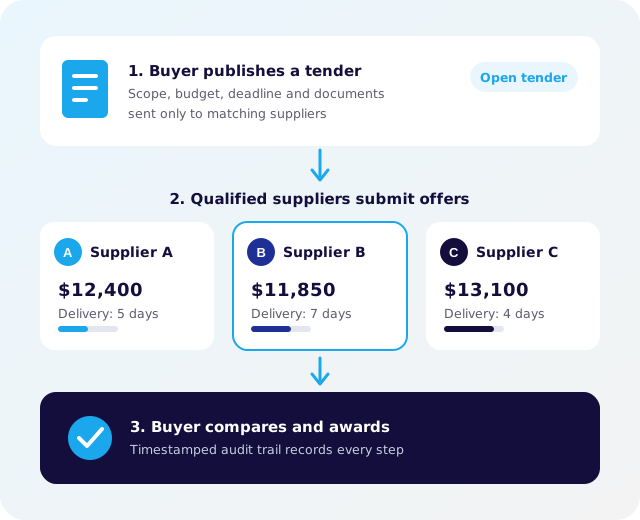
InfoSparkles provides tendering and bidding platform development for marketplaces, procurement teams and industry networks that want buyers and suppliers to meet through structured, competitive offers. We design and build web and mobile platforms where buyers publish tenders or requests, qualified suppliers are notified and submit offers, and the buyer compares, negotiates and awards the work with a complete, timestamped record of every step.
Whether you are launching a contractor bidding marketplace, a B2B request for quote platform, a reverse auction app or an internal tender management system, our team handles the full journey from business model strategy to design, development, launch and long-term support. Bidding platforms are part of our wider marketplace and mobility platform development practice, and we have been delivering software for clients across Europe, the United States, the UAE, Australia and the United Kingdom since 2014.
A tendering and bidding platform is a digital marketplace where buyers describe a job, project or purchase and qualified suppliers compete by submitting offers, so the buyer can compare options and award the work to the best fit. The platform manages tender publication, supplier matching, offer submission, communication, award and the record of everything that happened along the way.
Many industries still run tenders through email, phone calls and spreadsheets. Buyers struggle to reach enough qualified suppliers, suppliers waste time on requests that do not match their skills or location, and nobody has a reliable record of who saw what and when. A digital bidding platform sends each tender to the right suppliers automatically, standardizes how offers are submitted and compared and logs every interaction.
Every bidding platform connects at least three groups. Buyers post a tender with a description, location, budget, deadline and documents, then review offers, ask questions and award the work. Suppliers, such as contractors, tradespeople, service providers, vendors or drivers, receive matching tenders, submit offers and communicate with the buyer. Platform operators verify suppliers, manage categories and rules, monitor activity, handle disputes and track commissions or fees.
Different markets need different competition rules, and choosing the right model is the most important decision in building a bidding platform.
Open bidding lets suppliers see that others are bidding, and sometimes the current best offer, which encourages competitive pricing. Sealed bidding keeps offers private until the deadline, which is common in formal procurement. Single-offer tendering allows each supplier one offer per tender with no revisions, which protects supplier margins and discourages bidding wars. Reverse auctions let suppliers lower their price in real time until the auction closes. Counter-offer models let a supplier accept the buyer's stated price or propose their own, and the buyer chooses from all offers.
| Model | How it works | Best for |
|---|---|---|
| Open bidding | Suppliers bid with some visibility of competition | Fast-moving markets and price-led jobs |
| Sealed bidding | Offers hidden until the deadline | Formal procurement and B2B tenders |
| Single-offer tendering | One offer per supplier, no revisions | Trade and contractor marketplaces |
| Reverse auction | Suppliers lower prices live until close | Commodity purchasing and surplus sales |
| Counter-offer | Supplier accepts the price or proposes their own | On-demand transport, towing and services |
| RFQ | Buyer requests detailed quotes against a specification | Industrial and B2B purchasing |
We help you choose the model that fits your industry, and many platforms combine more than one, for example sealed tenders for large projects and counter-offers for quick jobs.
How bidding platforms make money. Commission on award charges a percentage of the job value when a tender is awarded, often billed monthly, while buyers use the platform free. Supplier subscriptions charge suppliers a monthly fee to receive tenders and submit offers. Pay per lead or per offer charges suppliers each time they unlock a tender or send an offer. Buyer posting fees suit professional procurement. Featured placement lets suppliers pay for greater visibility. Our platforms let you configure and combine these models.
Reaching the right suppliers. Sending every tender to every supplier creates noise and poor offers. Our platforms distribute each tender only to suppliers whose trade, category, certifications and service area match, using rules such as geo-fenced radius matching.
Inconsistent, hard-to-compare offers. Structured offer forms, required fields, attachments and side-by-side comparison views make evaluation faster and more objective.
Bidding wars that damage supplier margins. Configurable rules, such as one offer per tender, sealed bids or revision limits, protect supplier participation and quality.
Getting paid when the transaction happens elsewhere. Many tendering platforms let the buyer pay the supplier directly. We tie commission to the award event, backed by a timestamped audit trail of each qualifying interaction, so commissions are calculated automatically and the invoice is defensible.
No reliable record of the process. Every tender view, offer, message and award is logged with a timestamp, giving operators, buyers and suppliers a clear history for disputes and audits.
Low supplier retention. Reward points, performance badges, saved searches and fair distribution rules keep good suppliers active.
Multilingual and cross-border markets. Centrally managed translations, regional settings and multi-currency support are built in from the start.
Platforms where homeowners and businesses post jobs and local tradespeople, such as builders, electricians, plumbers and decorators, receive matching tenders and submit offers.
Platforms where companies publish requests for quotes and approved vendors compete on price, delivery time and terms, with structured evaluation and approval workflows. Learn more about our enterprise systems and SaaS development.
Marketplaces where clients invite proposals from consultants, agencies, designers or legal and financial professionals. See our work for professional services businesses.
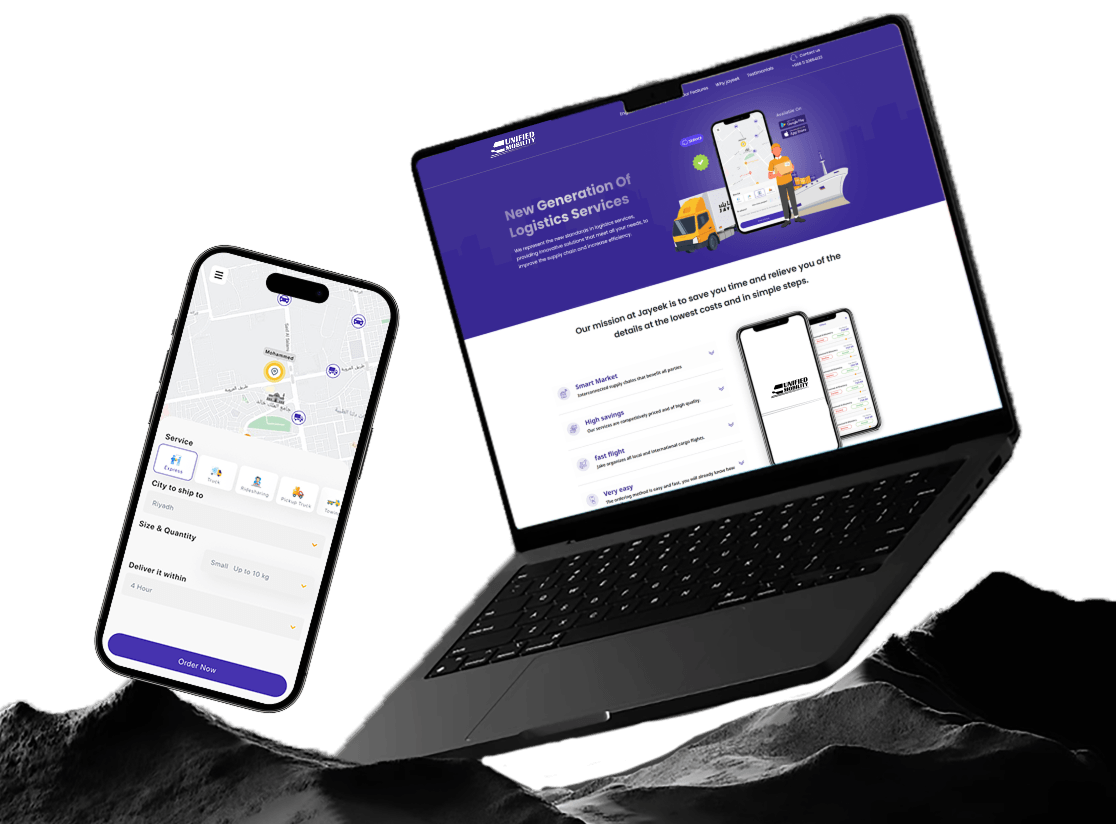
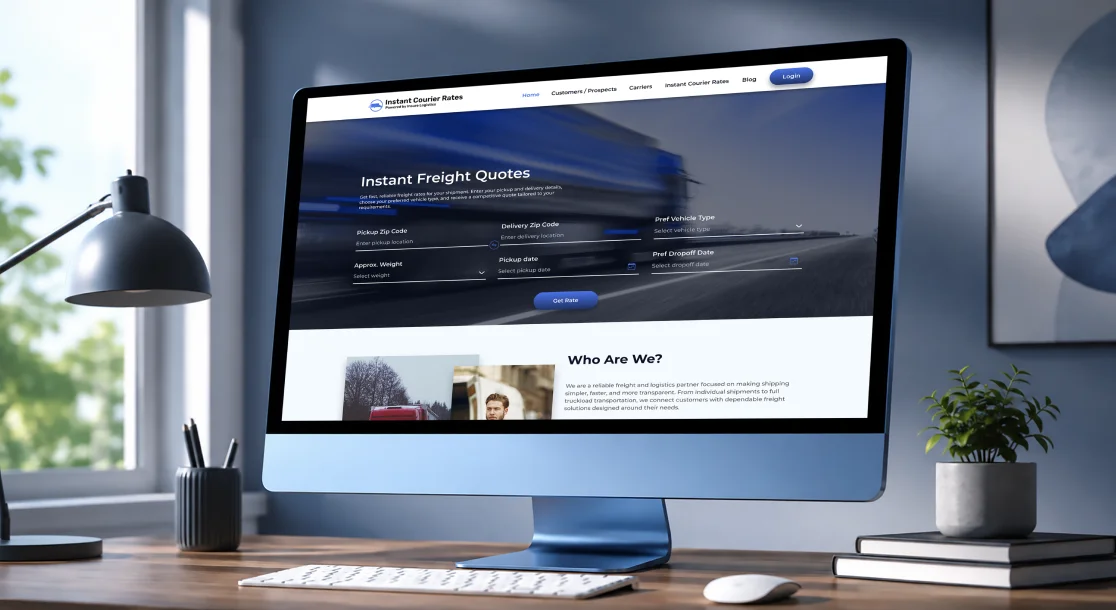
Platforms where customers post transport or towing requests and drivers or carriers make offers, the model used in our UAE mobility platform. Related: freight marketplace and load board development.
Main contractors sending subcontract packages to qualified subcontractors and comparing returned prices. Related: construction management software development.
Platforms where suppliers compete by lowering prices in real time, or where buyers bid on surplus stock, equipment or services.
Buyers need to reach the right suppliers quickly and choose with confidence. Our platforms guide buyers through creating a clear tender, with templates for common job types, attachments for plans and specifications and budget and deadline settings. Offers arrive in a structured format for side-by-side comparison, with supplier profiles, ratings, credentials and past work alongside each offer. Buyers can ask questions in chat, shortlist suppliers, award or decline in one click and track awarded work from one dashboard.
Suppliers want relevant work without wasted effort. The supplier app sends only tenders that match their trade and service area, shows full details before they commit time and makes submitting an offer quick, including prices, timelines and attachments. Suppliers can chat with buyers using real-time messaging with read receipts and file sharing, track offers, awards and assignments and see notifications and activity logs in one place. Reward points and badges recognize active, high-quality suppliers.
Operators can verify and manage suppliers and buyers, configure categories, distribution rules and bidding models, oversee tenders and offers, track commissions and invoices, manage rewards and resolve disputes using the full audit trail. The platform is modular and API-ready, so payments, contracts or project tracking can be added to the same core later. Geospatial search powers radius-based distribution, centrally managed translations support multilingual markets and role-based access separates operations, finance, compliance and support.
We connect bidding platforms with the services they depend on. For advanced matching logic, see our intelligent matching and pricing engines, and for fee and payout logic, our commission and payout systems.
Google Maps APIs for geocoding, service areas and radius-based tender distribution.
Payment gateways such as Stripe for supplier subscriptions, lead fees, commission invoices and, where needed, escrow-style payment flows.
Secure document storage for specifications and offers, plus e-signature tools for contracts and work orders after award.
Push notifications, email and SMS for new tenders, offer updates, deadlines and awards.
Accounting software for commission invoicing and CRM tools for buyer and supplier relationships.
For B2B procurement platforms, integration with buyers' ERP and purchasing systems so awarded tenders become purchase orders automatically.
Businesses usually choose between ready-made or white-label bidding software and a custom platform. Both have a place.
| Factor | White-label or ready-made | Custom bidding platform |
|---|---|---|
| Time to launch | Fast | Months, delivered in phases |
| Upfront cost | Low | Higher |
| Ongoing cost | Monthly licence or per-user fees | Hosting and maintenance, no per-tender fees |
| Bidding rules | Standard models only | Any model or mix, including single-offer and counter-offer |
| Distribution logic | Basic category matching | Trade, radius, certification and performance rules |
| Commission tracking | Usually only for payments processed on the platform | Award-based commission with audit trail, including off-platform payments |
| Ownership | Vendor owns the software and often the data | You own the code and all data |
| Competitive advantage | Same tool competitors can buy | Unique to your business |
White-label software can suit an internal procurement team running occasional tenders. Custom development makes more sense when the platform is your business, when your distribution or bidding rules are specific to your industry or when your revenue depends on tracking commissions reliably.
Cost depends on scope, and we provide a clear estimate after a short discovery phase. These factors have the biggest influence:
One model is simpler than several, and real-time reverse auctions add the most complexity.
Category matching is simpler than combined trade, radius, certification and performance rules.
A web platform alone costs less than buyer, supplier and admin apps for web, iOS and Android.
Award-based commission with audit trails, subscriptions and lead fees each add logic and testing.
Each language, currency and integration adds scope.
Most clients start with one bidding model and one market, prove demand and then expand.
A focused MVP with buyer and supplier portals, tender distribution, offers, chat, awards and an admin dashboard typically takes around four to six months. Platforms with several bidding models, mobile apps, commission tracking, rewards and multiple languages usually take six to nine months or more, delivered in phases.
We define your buyers and suppliers, categories, distribution rules, bidding model and revenue model, including how commissions will be tracked and collected.
Our architects design a modular core that can grow with new features, while our UI and UX design team designs buyer, supplier and admin journeys as clickable prototypes.
We build in short sprints with regular demos, implementing distribution, bidding rules, chat, awards and billing step by step.
We test every bidding rule and edge case, including deadlines, revision limits, awards and commission calculation, along with performance and security testing.
We launch on scalable infrastructure managed through our cloud and DevOps services and support onboarding of your first suppliers and buyers.
We refine distribution and bidding rules using real data and add new modules as the marketplace grows.
We choose technology for real-time communication, reliable rules and long-term flexibility. Final choices are confirmed during discovery.
Frontend
 React
React Vue
Vue Angular
Backend
 Node.js
 Python
 PHP
PHPMobile
 Flutter
Data and location
 PostgreSQL
 MySQL
MySQL Redis
RedisReal-time
 WebSockets
 Firebase
Cloud
 AWS
AWS Microsoft Azure
Payments
 Stripe
Integrations
 Accounting
 CRM
CRM Document storage
 ERP
ERPTendering platforms handle commercial pricing, business documents and personal data, so confidentiality and integrity are essential.
Bid confidentiality. Offers are visible only to the buyer and authorized staff, and sealed bids stay hidden until the deadline, with access controls enforced on the server, not just the interface.
Tamper-evident audit trails. Every tender, offer, message and award is logged with a timestamp, creating a reliable record for disputes, audits and commission invoicing.
Data protection. Data is encrypted in transit and at rest, and platforms are designed to support GDPR, UK GDPR, CCPA and CPRA and the Privacy Act 1988 in Australia, with consent management and data retention controls.
Secure payments. Subscriptions, fees and commission payments run through certified payment providers with tokenization, in line with PCI DSS requirements.
Supplier verification. Document checks, approval workflows and role-based permissions ensure that only qualified users take part.
We add AI where it clearly helps buyers and suppliers: smart supplier matching that ranks suppliers by fit, location, past performance and win rate; tender writing assistance that helps buyers turn rough notes into clear, complete tenders; offer comparison summaries that highlight differences in price, timeline and scope; price guidance based on similar past tenders; and fraud and collusion detection that flags suspicious account and bidding patterns. These capabilities are part of our wider AI-driven automation services.
Built for Fair, Transparent and Profitable Marketplaces
10+ years of custom software development experience
Proven expertise in offer-based marketplaces
Smart, geo-matched tender distribution

Award-based commission with full audit trails
Transparent communication and project delivery
Long-term support and continuous optimization
We don’t just build bidding software. We build marketplaces where buyers and suppliers trust every award.
A tendering and bidding platform is a digital marketplace where buyers publish a job, project or purchase request and qualified suppliers compete by submitting offers. The platform handles tender distribution, offer submission, communication, award and a timestamped record of every step.
In a tendering platform, suppliers usually submit one considered offer, often with documents and timelines, and the buyer evaluates offers on price and quality. In a reverse auction, suppliers compete in real time by lowering their price until the auction closes. We build both models and can combine them on one platform.
Yes. We build trade and contractor marketplaces where clients post jobs and tradespeople within a set radius whose trade matches receive the tender and submit offers, with chat, awards, ratings and commission or subscription billing.
Common models include a commission on awarded jobs, supplier subscriptions, pay per lead or per offer, buyer posting fees and featured placement. We can also build commission tracking that works when buyers pay suppliers directly outside the platform.
We tie commission to the award event and record every qualifying interaction, such as tender viewed, offer sent, first message and award, in a timestamped audit trail. The platform then generates commission invoices automatically, with the evidence needed to support them.
Cost depends on the bidding models, distribution rules, number of apps, commission and billing logic, languages and integrations. Most clients start with one bidding model and one market. We provide a free estimate after a short discovery conversation.
A focused MVP with buyer and supplier portals, tender distribution, offers, chat, awards and an admin dashboard typically takes around four to six months. Larger platforms with several bidding models, mobile apps, rewards and multiple languages usually take six to nine months or more.
Yes. We build sealed bidding, deadlines, eligibility rules, evaluation criteria and approval workflows, with offers hidden until the deadline and a full audit trail. Formal public sector procurement rules vary by country, so we scope the exact requirements during discovery.
Yes. We provide ongoing maintenance, monitoring, security updates and feature development, and we refine distribution and bidding rules using real platform data.
Case Study
Whether you are launching a contractor marketplace, a B2B request for quote platform or a reverse auction app, we are ready to help. Tell us about your buyers, suppliers and goals, and our team will recommend the right bidding model, revenue model and a realistic plan to launch.