

Custom Marketplace & Mobility Platform Development
Multi-vendor marketplaces, on-demand and ride-hailing apps, service aggregators with the matching engines, commission payouts, and real-time dispatch that make two-sided platforms actually work at scale.
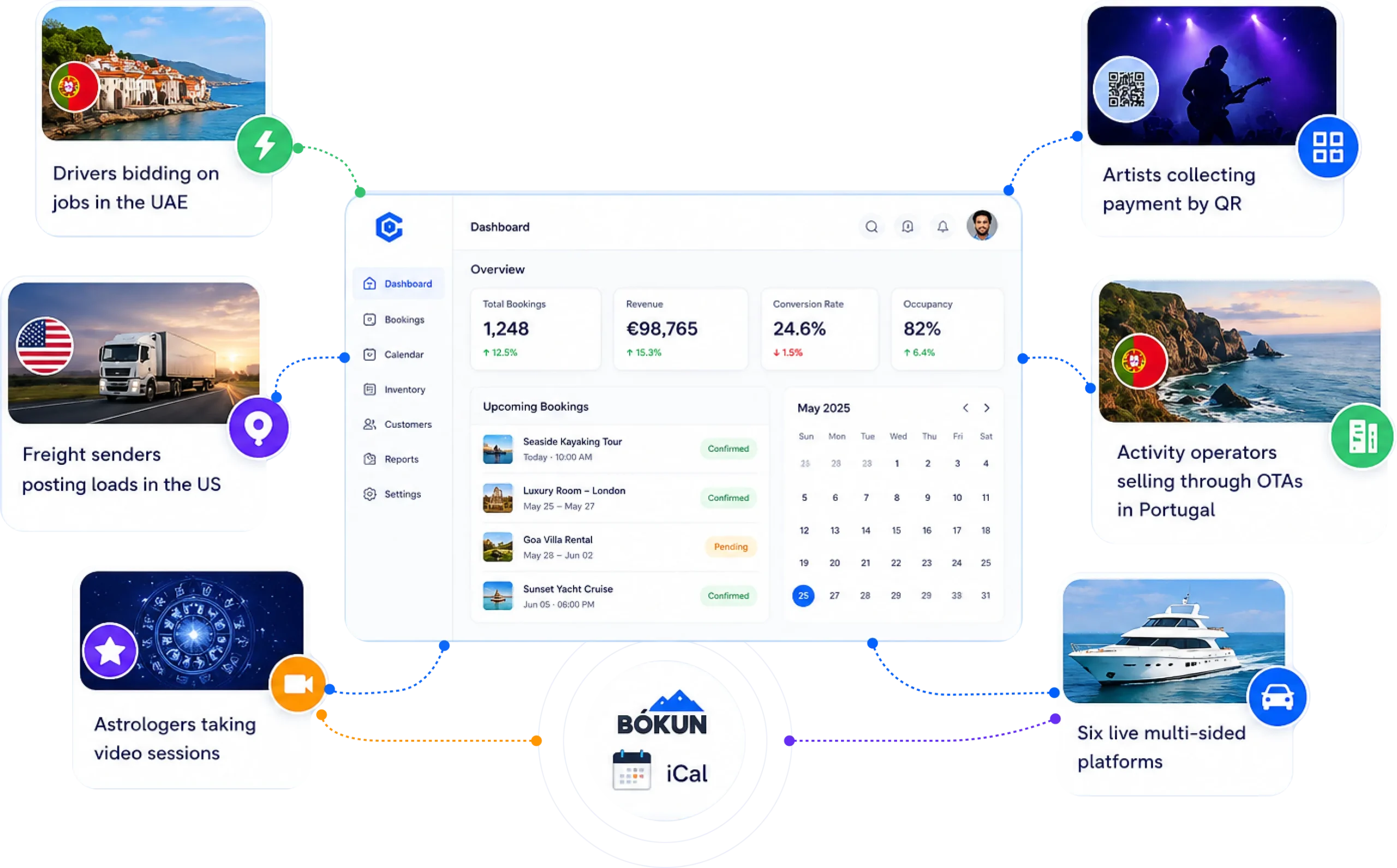

6 multi-sided platforms live
· UAE · US · Portugal · India

12+ years engineering

15+ Countries Served
Marketplaces Don’t Fail on Features.
They fail on four things, and none of them are on a feature list.
No supply. The platform launches, the demand side works perfectly, and there’s nothing to buy. Every marketplace faces this and most build no tooling to solve it.
Bad matching. A request goes out and the right supplier never sees it, or sees it too late. In on-demand this is measured in seconds, and it decides whether the platform works.
No trust. Neither side knows the other. Without verification, ratings, in-platform communication, and a dispute path, the first bad transaction costs you both users – and they tell people.
Money. One transaction, several parties, each on their own rate, with cancellations and partial refunds to handle. Get the payout logic wrong and you lose suppliers permanently.
Then there’s the question that comes before all of it: how does the platform actually earn? Commission, subscription, transaction fee, listing fee, usage – the answer changes your architecture, not just your pricing page.
We’ve built platforms on all of these. That’s the conversation we start with.
Matching Models
Four Ways to Connect Supply and Demand
How your two sides find each other is the core architectural decision. We’ve shipped four models.
Broadcast & Bid
Demand posts a request. Every relevant nearby supplier is notified in real time and can accept the offer or counter with their own price. The customer chooses from the offers received.
Built in:
- Jayeek
- US logistics platform
Needs: Real-time geospatial matching, concurrent offer handling, expiry logic, and push at scale.
Browse & Instant Book
Demand searches listings, picks, and confirms immediately against live availability.
Built in:
- Tourysta
- Tourtastique
Needs: An availability engine with atomic locking and capacity rules.
Browse & Scheduled Session
Demand books a supplier’s time – with a defined response window or a live session rather than a physical delivery.
Built in:
- Adhya Universe (1-hour, 8-hour, and 24-hour response tiers, plus live chat, audio, and video sessions)
Needs: SLA tracking, session billing, and in-app real-time communication.
Direct Request & Pay
No search at all. The supplier initiates – a QR code scanned in person, or a payment request sent to a known customer.
Built in:
- GhostPay
Needs: QR payment flows, request lifecycle, and instalment options at the point of payment.
Monetisation Models
Five Ways We’ve MadeMarketplaces Earn
Founders spend months on this decision. It’s an architecture question as much as a commercial one, and we’ve built all five.
| Model | How it works | Where we’ve built it |
|---|---|---|
| Multi-party commission | A cut of each transaction, split across several earning parties | Tourysta – operator, affiliate, referring hotel, and platform on one booking |
| Supply-side subscription | Suppliers or requesters pay to participate, regardless of volume | US logistics platform – senders subscribe to post requests |
| Transaction & payment fees | Revenue on payment processing, with instalment options lifting conversion | GhostPay – QR payments and BNPL via Afterpay and Klarna |
| Service fees & retention offers | Per-session revenue, with automated lifecycle offers driving repeat purchase | Adhya Universe – discounting plus automated birthday and call-back offers |
| Referral & affiliate commission | Third parties earn for sending demand, expanding distribution at zero fixed cost | Tourysta – hotel partner and affiliate programmes |
Featured Builds
Marketplaces We’ve Shipped
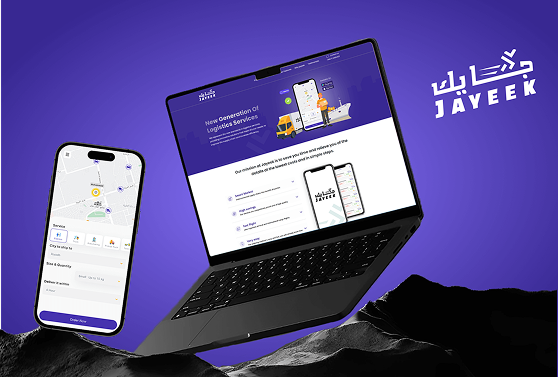
Jayeek
On-Demand Transport & Towing UAE
- A mobility marketplace where drivers list cars, trucks, towing trucks, and mini pickups, and customers get competing offers instead of a fixed price.
- A customer selects the service they need and posts a request. Every nearby driver is notified in real time and can accept it or counter with their own price – the customer then chooses from all offers received. Once accepted, the app opens live chat between driver and customer, provides turn-by-turn directions, and pushes arrival, delivery, and cancellation updates as the job progresses. Both sides rate each other afterwards.
- The hard parts: Real-time geospatial matching to surface nearby drivers, a reverse-auction flow with concurrent offers and expiry, live chat, continuous location tracking that doesn’t destroy the battery, and a full job lifecycle from request through to mutual rating. Native iOS and Android.
- Drivers Onboarded
- Jobs Completed
- Average Time To First Offer
- Cities Live
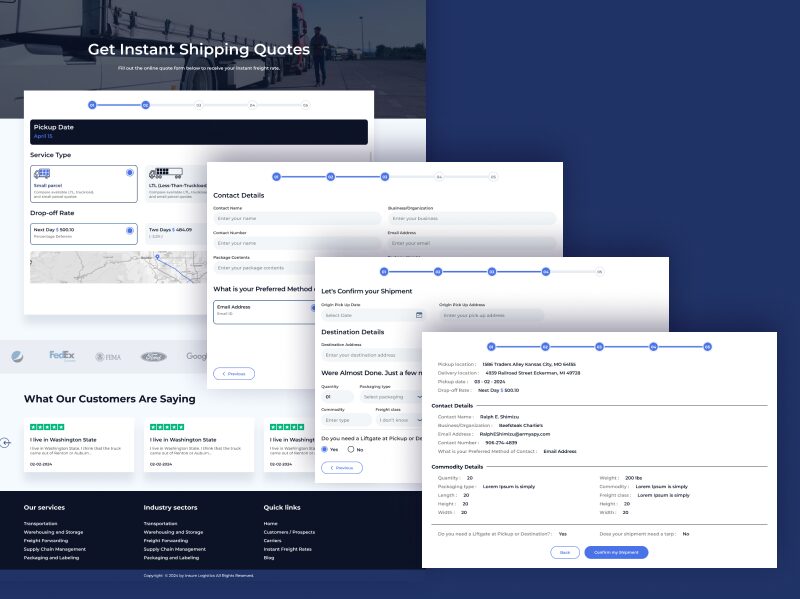
US Logistics Marketplace
Freight Matching
- A logistics platform where senders post shipment requests and carriers accept them, with multiple senders and drivers operating on the same network.
- Senders take a subscription to post requests, which changes the economics substantially – revenue is predictable and independent of transaction volume, and the platform doesn’t have to take a cut of every load to be viable.
- The hard parts: the same broadcast-and-accept architecture as Jayeek, plus subscription tier management and entitlement enforcement, and carrier verification.
- Why it’s here: this is the second time we’ve built broadcast-and-bid matching. The pattern is proven, which means it’s faster and lower-risk the third time.
- Senders Subscribed
- Carriers Onboarded
- Loads Matched
- Match Rate
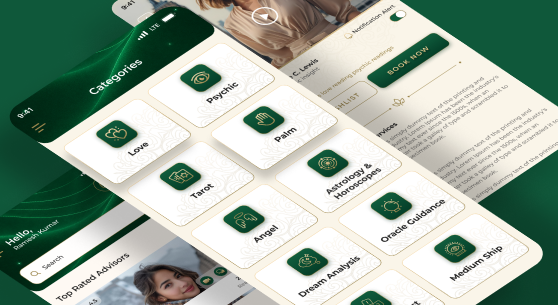
Adhya Universe
Astrology Services Marketplace
- A services marketplace where multiple astrologers onboard and list their offerings, and customers book time rather than a physical delivery.
- Customers choose a written Q&A with a tiered response window – 1 hour, 8 hours, or 24 hours – or connect live by chat, audio call, or video call. The platform runs discounting and offers, plus automated retention: birthday offers and call-back offers that fire without anyone triggering them manually.
- The hard parts: WebRTC audio and video in-app, SLA tracking and enforcement across tiers, session-based billing, and automated lifecycle marketing tied to customer data.
- Practitioners Onboarded
- Sessions Completed
- Repeat Purchase Rate
- Retention Offer Conversion
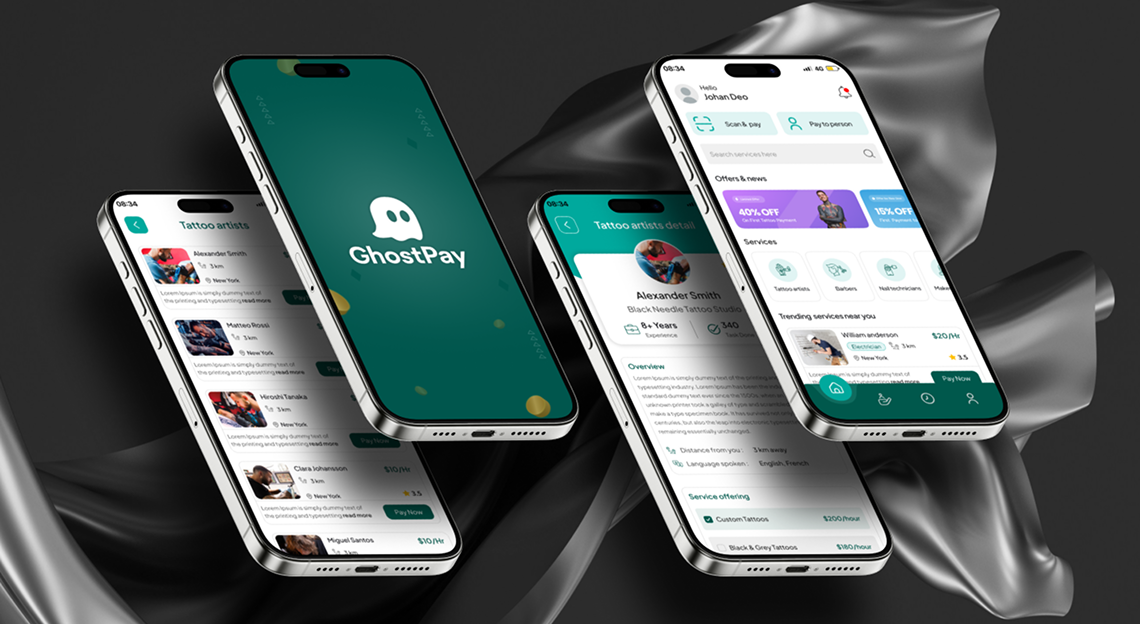
GhostPay
Payments & Service Marketplace United States
- A marketplace where artists and independent service providers list services and get paid – without the customer needing to search for them first.
- Providers list their services and customers book. Payment happens by scanning a QR code in person, or against a payment request the provider sends directly. Customers pay in full or in instalments through Afterpay and Klarna, which materially lifts conversion on higher-value bookings.
- The hard parts: QR-based in-person payment, BNPL integration including the approval and settlement lifecycle, provider payouts, and handling money in a US regulatory context.
- Providers Onboarded
- Transaction Volume
- BNPL Uptake
- Average Order Value Uplift
Also Built on This Model
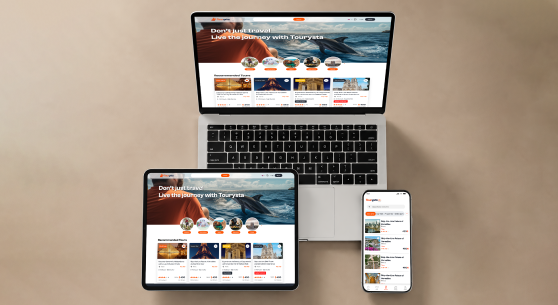
Tourysta
activities marketplace in Portugal with four-way commission distribution, hotel partner and affiliate programmes, and bundled transfer booking.
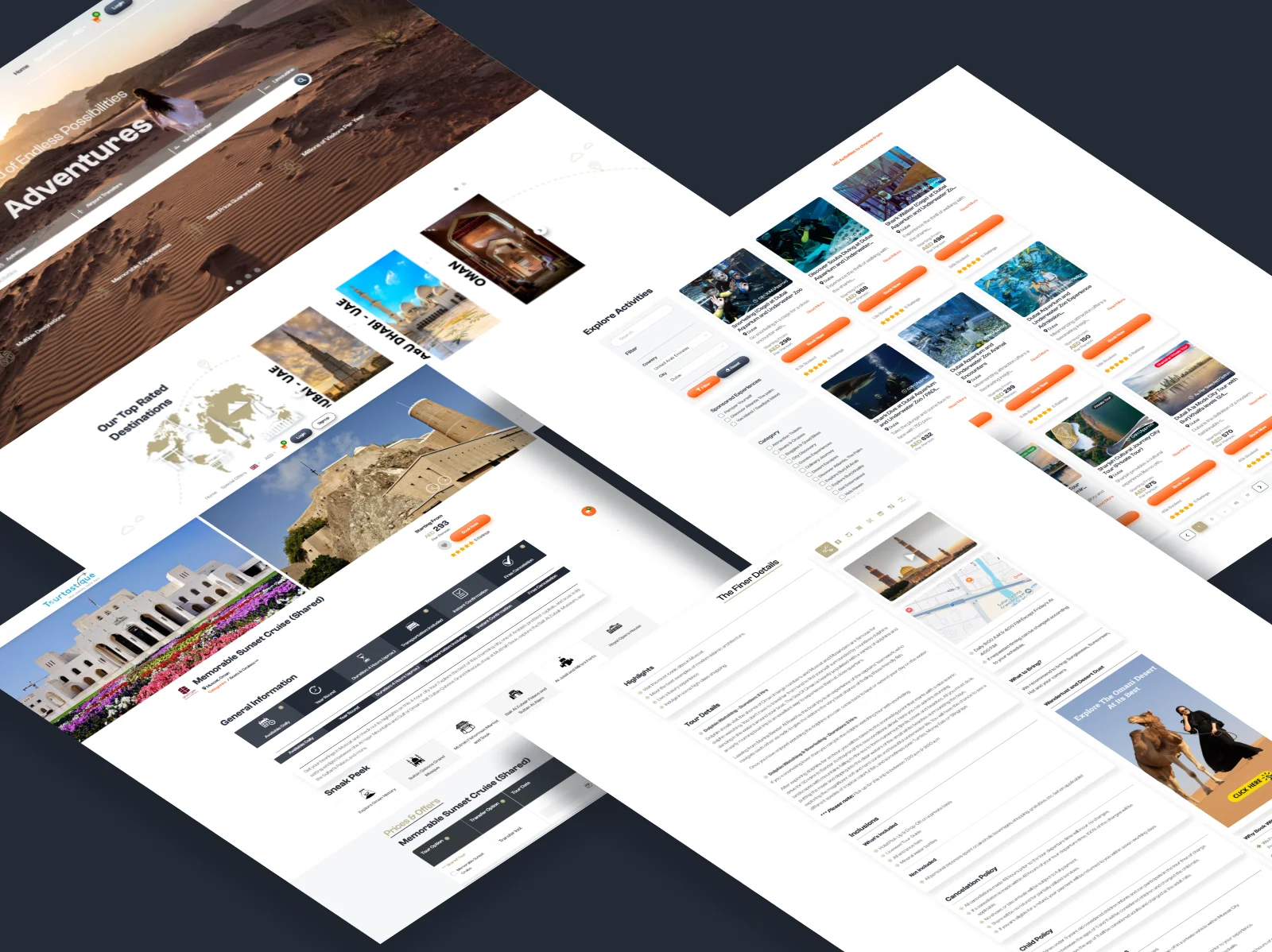
Tourtastique
multi-category travel marketplace covering city tours, excursions, yacht charters, limousines, transfers, and golf tee times.
What We Build
The Four Systems Inside a Marketplace

Supply Onboarding & Management
Signup and verification, document and licence checks, self-service listing tools, per-supplier pricing and availability control, performance dashboards, and suspension or offboarding workflows. Supply-side experience is what determines whether your suppliers stay.

Matching & Dispatch Engine
Real-time geospatial search for nearby supply, relevance and proximity ranking, broadcast with concurrent offer handling, expiry and re-broadcast when nobody responds, and fallback logic. In on-demand, time to first offer is the metric that decides whether the platform works.

Trust & Safety Layer
Two-sided ratings and reviews, identity and document verification, in-platform chat so contact details stay inside the system, job lifecycle states with timestamps, cancellation policy enforcement, and a dispute path. Without this, one bad transaction costs you two users.

Payments, Splits & Payouts
Multi-party splits with configurable per-party rates, escrow and delayed capture, instalment and BNPL options, subscription billing and entitlements, refunds and partial refunds that recalculate every split correctly, and scheduled automated payouts.

Real-Time & Mobility Layer
Live location tracking, driver and courier dispatch, turn-by-turn routing, geofenced arrival detection, ETA calculation, and push notifications at scale — engineered for battery and data cost, not just for correctness.

Platform Operations
Admin tooling for the marketplace operator: supply oversight, transaction monitoring, dispute queues, commission configuration, and the liquidity metrics you need to see daily — match rate, time to match, supply utilisation, repeat rate.
Where AI Fits
AI Where It Earns Its Place
Marketplaces generate the exact data these models need: matching history, pricing outcomes, and behaviour on both sides.
01
Smarter matching
Rank supply on acceptance history, rating, and route fit rather than proximity alone, which directly improves match rate
02
Dynamic pricing
Surge and demand-responsive rates, plus suggested counter-offers in bidding models based on historical accept rates
03
Fraud and abuse detection
Flag suspicious signups, collusion, and payment fraud before they cost you money
04
Demand forecasting
Predict where and when demand will appear so supply can be positioned ahead of it
05
Churn prediction on the supply side
Supplier attrition is more expensive than customer attrition, and it’s predictable from activity patterns
06
Automated support
Assistants handling the repetitive both-sides questions that dominate marketplace support volume
07
Review and dispute triage
Surface quality problems across suppliers before they reach your ratings
Integrations & Stack
What We Build On

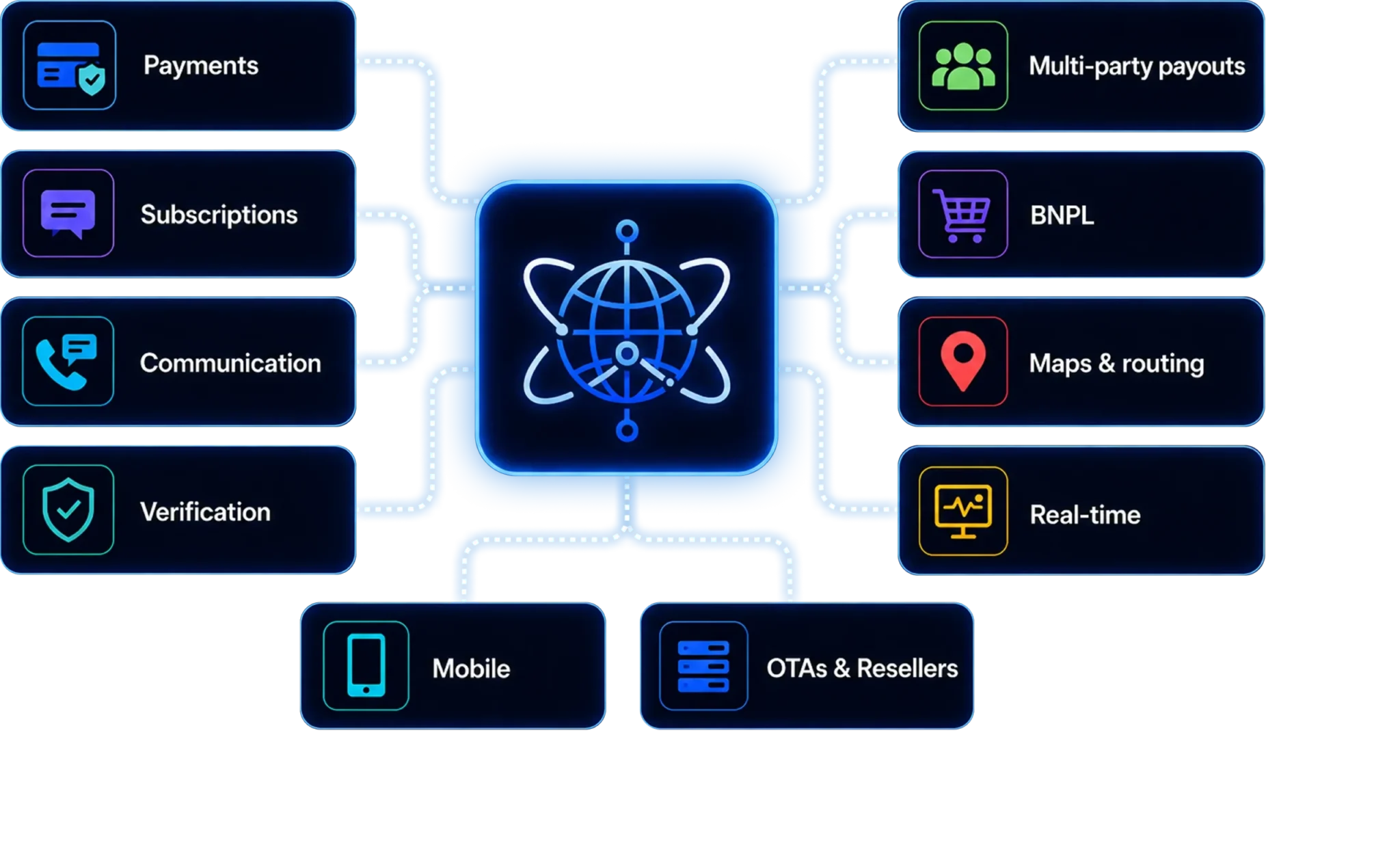
Payments
Stripe, Adyen, PayPal, Razorpay, regional gateways

Multi-party payouts
Stripe Connect and equivalents for split settlement

BNPL
Afterpay, Klarna

Subscriptions
Recurring billing with tiered entitlement enforcement

Maps & routing
Google Maps Platform, Mapbox, distance matrix and geocoding

Real-time
WebSockets, Firebase, push via FCM and APNs

Communication
In-app chat, WebRTC audio and video, Twilio, WhatsApp Business API

Verification
Identity, document, and background check providers

Mobile
Native Swift and Kotlin where background location and sustained video demand it, React Native or Flutter where they don’t
Process
How a Marketplace Project Runs
01
Marketplace Model Session
Free, 45 minutes We work through your matching model, monetisation model, and cold-start problem. You leave with a written recommendation: which of the four matching models fits, which revenue model suits your margins, a supply-acquisition plan, and a scope estimate. Yours to keep either way.
02
Model & Architecture
2 to 4 Weeks Matching logic, commission or subscription rules, trust and verification requirements, and payout flows documented before anything gets built. Changing your revenue model after launch is expensive; changing it in this document is free.
03
Supply Side First
6 to 10 Weeks We build the supplier experience before the customer app. This is counterintuitive and it’s the right order: you can onboard real supply while the demand side is still in development, so you don’t launch into an empty marketplace.
04
Demand Side & Matching
8 to 14 Weeks Customer app or web, the matching engine, payments, and the trust layer. Load-tested for concurrent requests, because matching failures under load are the failure mode that kills on-demand platforms.
05
Liquidity Launch
Phased launch, usually geographic. We build the onboarding tooling and instrument the metrics that tell you whether the marketplace is actually working – match rate, time to match, supply utilisation.
06
Scale & Optimise
Matching improvements, pricing tuning, retention automation, and expansion into new categories or regions on the same platform.
Why Infosparkles
Why Teams Bring Us In
01
We’ve built six multi-sided platforms.
Mobility, freight, professional services, payments, and travel — across the UAE, US, Portugal, and India. This is our deepest specialism, not an adjacent capability.
02
We’ve built broadcast-and-bid matching twice.
Jayeek and the US logistics platform run the same core architecture. Proven patterns are faster and lower-risk than first attempts.
03
Multi-party money is proven ground.
Four parties earning from one transaction on Tourysta, held correctly through cancellations and partial refunds. Most platforms can’t do it and most agencies have never had to.
04
We build the supply side first.
So you’re not launching into an empty marketplace.
05
We advise on the revenue model, not just the build.
Commission, subscription, transaction fees, service fees, affiliate — we’ve shipped all five and we’ll tell you which fits your margins.
06
You own the platform and both sides of the relationship.
No per-transaction fees to us, no data held hostage.
Frequently Asked Questions
Yes — Jayeek is a live on-demand transport and towing marketplace in the UAE, with real-time driver matching, a driver bidding flow, live chat, location tracking, and mutual ratings. Native iOS and Android.
Supply, not software. We build the supplier onboarding tooling first so you can acquire real supply while the customer side is still in development. The technical answer is matching — in on-demand, time to first offer decides whether the platform works.
Depends on your margins, transaction frequency, and how price-sensitive your supply is. Commission scales with volume but suppliers resent it as they grow; subscription gives predictable revenue and is easier to sell to high-volume suppliers. We’ve built both — the model session covers which fits you.
Yes. Jayeek and our US logistics platform both run broadcast-and-bid: the request goes out, suppliers accept or counter-offer, and the customer chooses from the offers received.
Configurable rates per party, calculated at transaction time, tracked through the lifecycle including cancellations and partial refunds, and settled on scheduled automated payouts. Built for four-party splits on Tourysta.
Yes. Jayeek runs live chat between driver and customer; Adhya Universe runs chat, audio, and video sessions between customers and practitioners.
Building two-sided (or multi-sided) digital platforms that connect supply and demand, buyers with vendors in a marketplace, or riders and customers with drivers and providers in a mobility platform. It includes the customer, vendor/driver, and admin apps, plus the matching, payments, commission, and dispatch engines that make them work.
We build split payments, automated commission calculation, and scheduled payouts to vendors or drivers, integrated with gateways like Stripe Connect, PayPal, and regional processors. Escrow, wallets, refunds, and multi-currency are supported, with a clear admin view of every transaction and payout.
Yes — GhostPay supports Afterpay and Klarna alongside full payment, including approval and settlement.
Two-sided ratings, identity and document verification, in-platform communication so contact details stay in the system, timestamped job lifecycle states, enforced cancellation policies, and a dispute path.
Typically 4–7 months to a launchable platform. Real-time matching, multi-party payouts, and in-app video each add meaningfully; a simpler listing-and-booking marketplace is faster.
Yes, and you should. We build for phased geographic and category rollout, because liquidity is easier to reach in a narrow market than a broad one.
You do, on delivery. Full source, documentation, and deployment access.
Yes. We architect for scale from day one real-time matching and pricing engines, scalable microservices, and infrastructure that handles growing numbers of vendors, drivers, and concurrent transactions. We’ve built ride-logistics and marketplace platforms running in production across multiple countries.
Yes. These platforms usually need several connected apps, a customer app, a vendor or driver app, and an admin dashboard as web, iOS/Android, or both, sharing one backend so inventory, orders, and availability stay in sync across every side.
Get Your Marketplace Model Right First
Book a free 45-minute session. We’ll work through your matching model, your revenue model, and how you’ll solve the cold-start problem — and send you a written recommendation with a scope estimate. Yours to keep, no obligation.