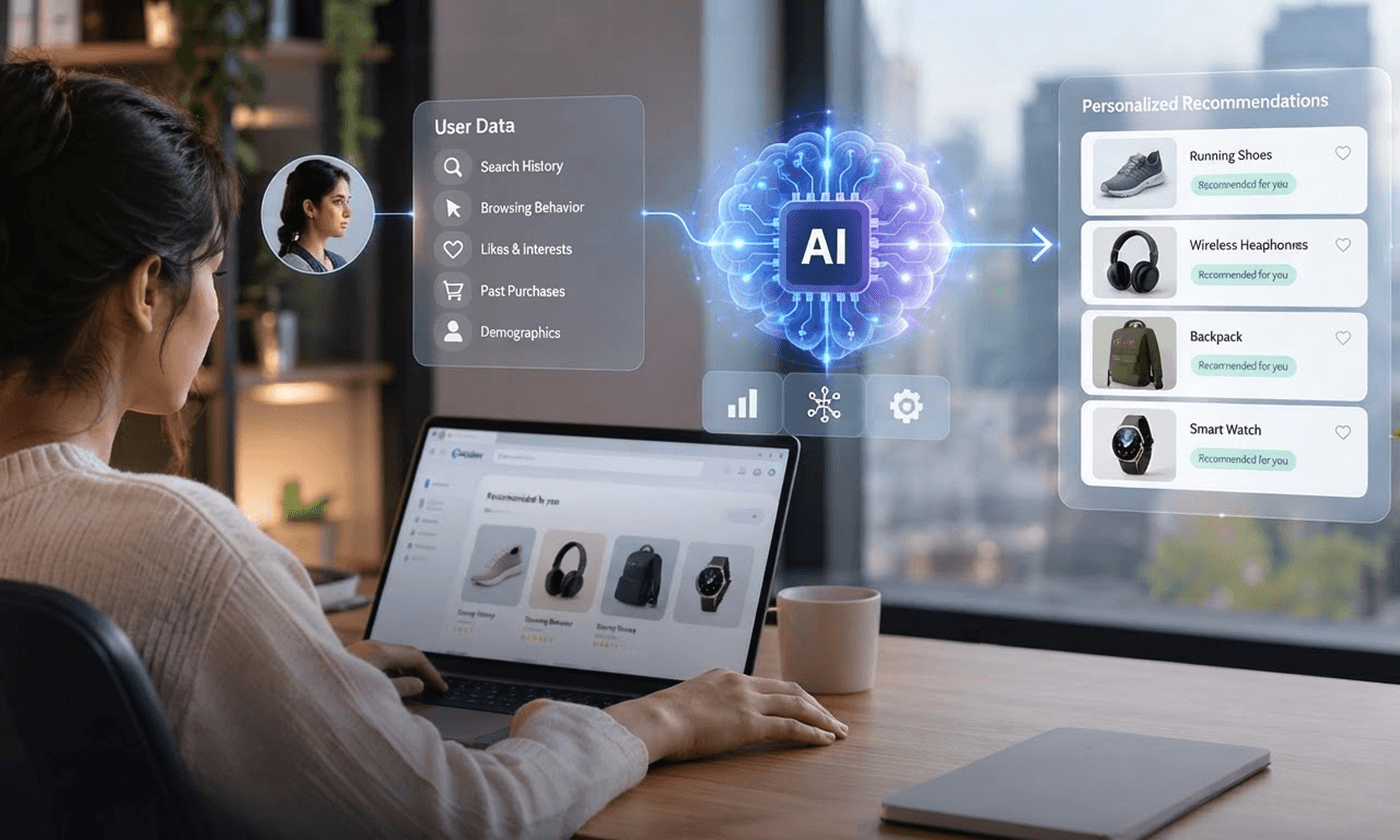
AI-powered software is transforming how businesses operate. Learn the key differences between AI and traditional software and how to choose the right approach.
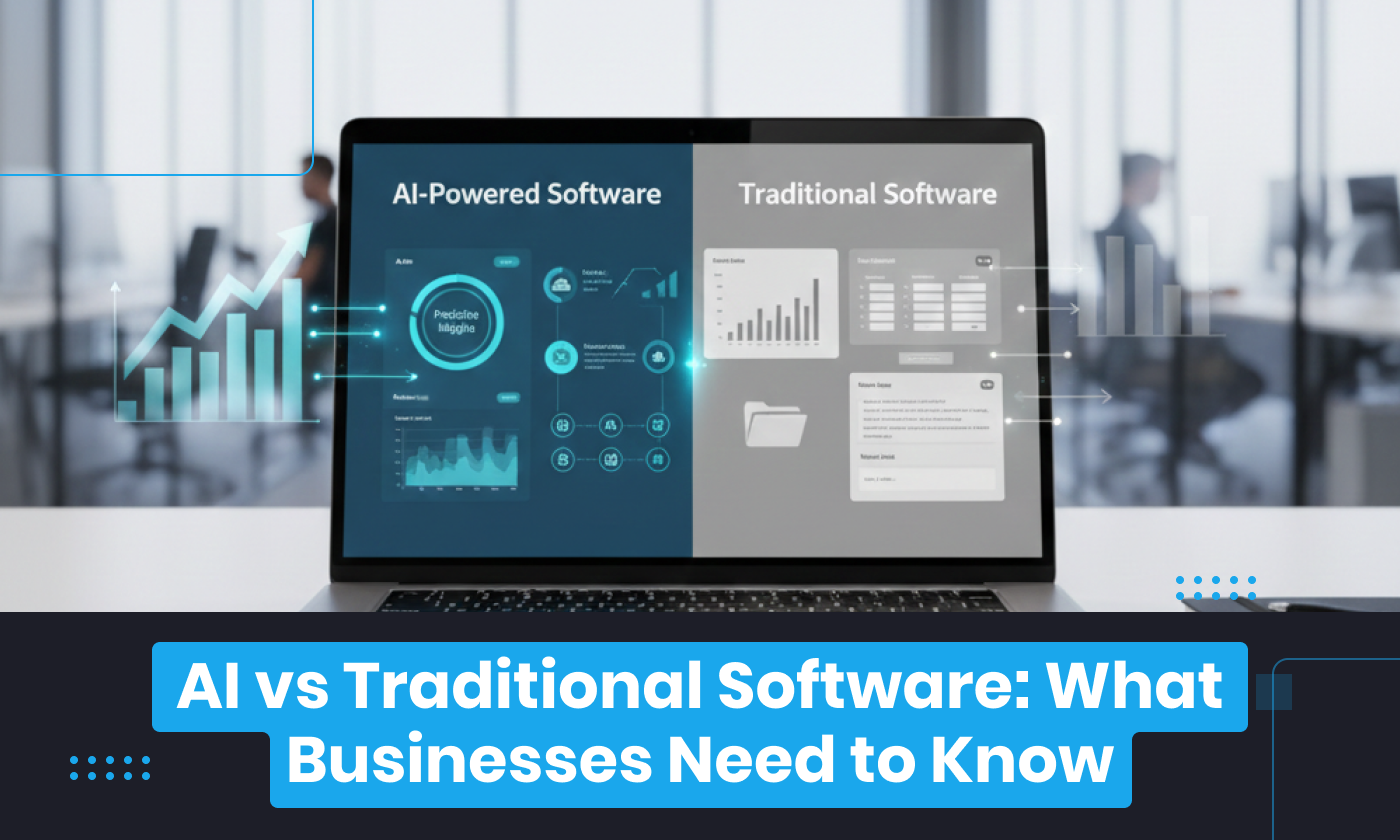

For decades, businesses have relied on traditional software to automate tasks, manage data, and streamline operations. Accounting systems, CRMs, ERPs, and websites all helped companies work faster and more efficiently.
But today, software is evolving beyond automation. With Artificial Intelligence (AI), systems can now learn, predict, and adapt. This shift is forcing business leaders to ask an important question:
Should we continue using traditional software, or is it time to adopt AI-powered solutions?
This article explains the real difference between AI and traditional software, where each makes sense, and how businesses can make informed decisions without unnecessary complexity or hype.
Traditional software works on predefined rules and logic. Developers write code that tells the system exactly what to do in specific situations.
For example:
These systems are highly reliable and predictable. When inputs are the same, outputs are always the same. For many years, this approach worked perfectly because businesses needed consistency and control.
However, traditional software has a limitation—it cannot think, learn, or improve on its own. Any change requires manual updates, configuration, or redevelopment.
AI-powered software goes beyond fixed rules. Instead of being told exactly what to do, AI systems are trained using data and patterns.
AI software can:
For example, instead of manually defining customer segments, AI can analyze behavior and automatically identify high-value customers or churn risks.
This ability to adapt and evolve is what separates AI from traditional software.
The most important difference is not technical—it’s operational.
Traditional software supports business processes exactly as designed. AI software enhances and improves those processes continuously.
With traditional systems, businesses must:
With AI-enabled systems, businesses gain:
This shifts software from a support role to a strategic decision-making partner.
AI is powerful, but it is not always necessary.
Traditional software is still ideal when:
For example, payroll systems, basic accounting, and compliance-driven workflows often work best with traditional software.
Replacing these with AI without a clear benefit can add unnecessary complexity.
AI delivers the most value in areas where data, patterns, and behavior matter.
These include:
In these scenarios, AI helps businesses move from reactive decisions to proactive strategies.
One common misconception is that AI is always expensive. In reality, cost depends on use case and implementation approach.
Traditional software often has:
AI software may involve:
However, AI often delivers long-term cost savings by reducing manual effort, improving accuracy, and increasing efficiency.
The key is to implement AI where it clearly improves outcomes, not everywhere.
AI depends heavily on data quality and availability.
Businesses considering AI must evaluate:
Without good data, AI cannot deliver meaningful results. In such cases, strengthening traditional systems and data pipelines should come first.
The smartest businesses don’t replace traditional software entirely—they enhance it with AI.
For example:
This hybrid approach combines the stability of traditional software with the intelligence of AI.
Implementing AI without clear objectives can lead to:
AI should always be driven by business goals, not trends.
A clear strategy ensures AI supports growth rather than becoming a distraction.
The right question is not AI or traditional software.
The right question is:
Where can intelligence improve outcomes?
Businesses should evaluate:
A thoughtful approach ensures technology investments align with real business value.
At InfoSparkles IT Solution, we help businesses:
Our goal is not to push AI—but to apply it where it delivers measurable impact.
AI is transforming software, but traditional systems still play a vital role.
The future belongs to businesses that:
When implemented correctly, AI doesn’t replace traditional software—it elevates it.
AI is transforming software, but traditional systems still play a vital role.
The future belongs to businesses that:
When implemented correctly, AI doesn’t replace traditional software—it elevates it.
Not sure whether AI is right for your business?
Talk to InfoSparkles IT Solution to design a smart, future-ready software strategy.
At Infosparkles, we help businesses grow with smart IT solutions,
modern web development, and innovative digital services.
Have a project idea or need technical support?
Our team is ready to help you.
Leverage intelligent systems and scalable tech to stay ahead.
"Infosparkes IT is responsive - highly capable and their website development team is first class- in all aspects from graphics to forms to features to user-friendly design. Before using them I looked at a lot of other options and after seeing their past work it was an easy decision. And the result is brilliant . And affordable . A big shout out to Rohit who handles the communication aspect."
Zac Warat Australia
"I had a fantastic experience working with InfoSparkles. From the very beginning, they provided top-notch service, but what really sets them apart is their optimal customer support even after the project was completed. They don’t just deliver and disappear; they make sure everything runs perfectly in the long run.
Whether it’s apps or websites, the results are high-quality, and the entire development process is actually fun! You can really tell that the team is happy and motivated – just like you see in their photos. They are upbeat, professional, and a joy to work with. Highly recommended for anyone looking for great results and a positive partnership."
"We had an amazing experience working with Info Sparkles on our website project. From the very beginning, their team was professional, creative, and truly understood our vision. They guided us through every step — from design to functionality — and made the entire process smooth and stress-free. The final website turned out even better than we imagined — modern, user-friendly, and perfectly aligned with our brand. They were always available for our questions, gave us valuable suggestions, and delivered everything on time. We are extremely happy with the results and would highly recommend Info Sparkles to anyone looking for a reliable and talented web development partner. Thank you for helping us bring our vision to life!"
Anuj India"This was a great experience working with this Team. The project was large and involved mowing close to 200,000 images to a new Gallery Format. Issues faced were consistent poor Server performance, which they overcame with great patience. Then this was followed by moving the whole website to a new ugraded server in the midst of massive Bot Ddos attacks. All of this they achieved without the slightest sign of frustration. Well done, well above average performance."
Steve Australia"I have been working with them for the past few years on various projects, one of the best companies i have worked with, amazing team, delivers on time, understands the projects fully, very helpful, give advise on the best way to create and make the project more efficient .... will continue working with them for our next projects. highly recommended"
Nasser United Arab Emirates"Excellent team & output! They built high-end Android & iOS apps and backend from scratch, delivering results similar to giants like Temu & AliExpress. With just the Figma design, they quickly understood and implemented the logic with minimal clarifications. Powerful, highly skilled, intelligent team that brings ideas to life, overcomes challenges, and is polite, flexible, and easy to work with. Backend Tech stack: MySQL, NodeJS, React. Pleasure to work with InfoSparkles. I'll keep hiring!"
Mohammed Sri Lanka"I recently had the pleasure of working with Infosparkles IT Solution on a web application project, and I couldn't be more satisfied with the results. From the very beginning, Harish and team demonstrated a deep understanding of the requirements and brought innovative ideas to the table that significantly improved the functionality and user experience of the application. I highly recommend Infosparkles IT Solution to anyone looking for a reliable, skilled, and creative freelancer. Infosparkles IT Solution is an exceptional team. They excel at interpreting and implementing project requirements, and their communication is outstanding. Their proactive approach to suggesting solutions and their responsiveness were impressive. Despite our project's complexity, they worked tirelessly to complete it. I highly recommend their services."
Durya USA



You may share your requirements at contact@infosparkles.com and our team will get back to you right away.